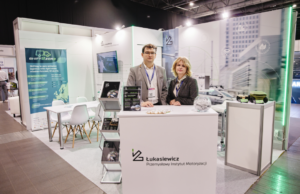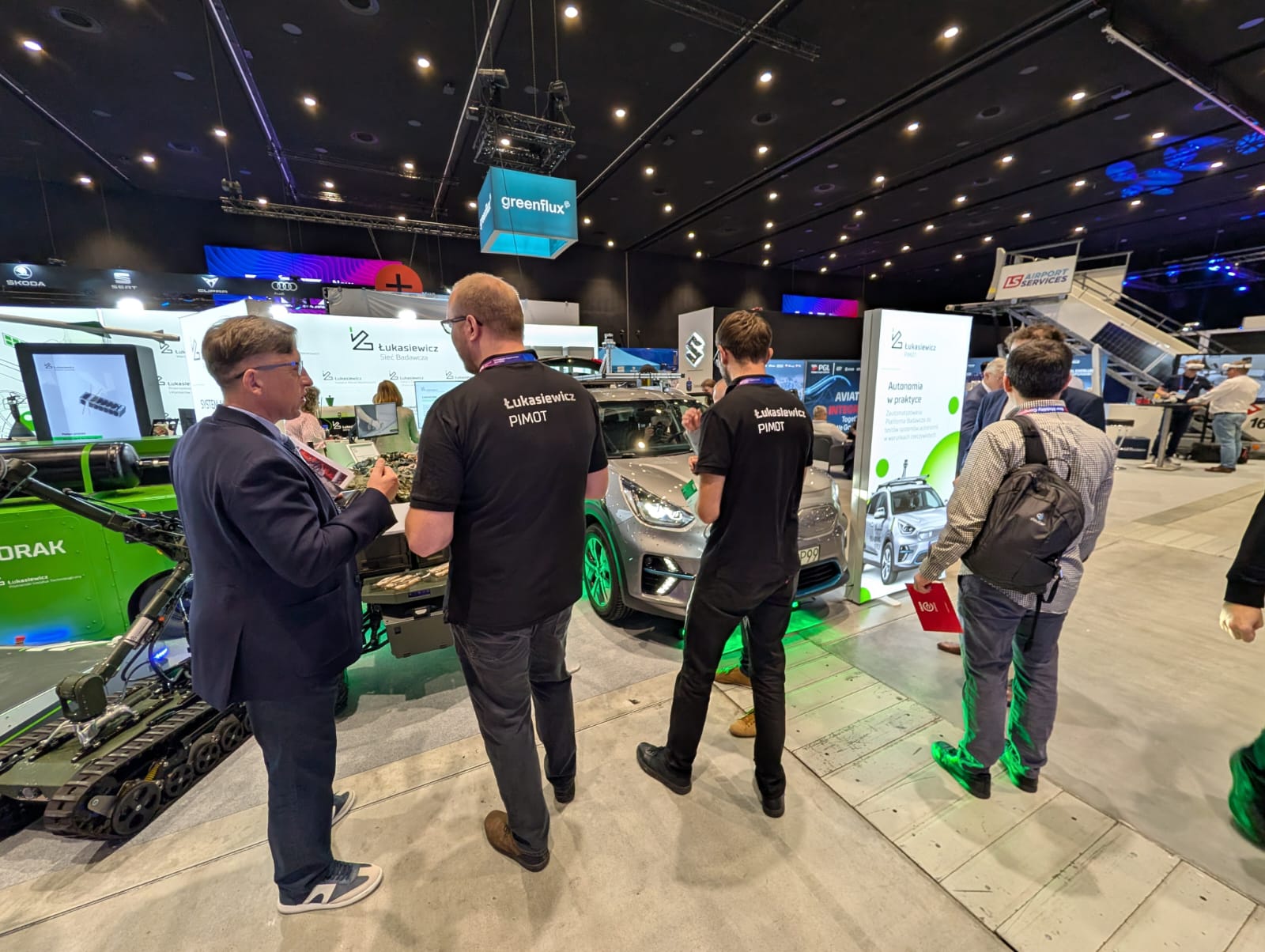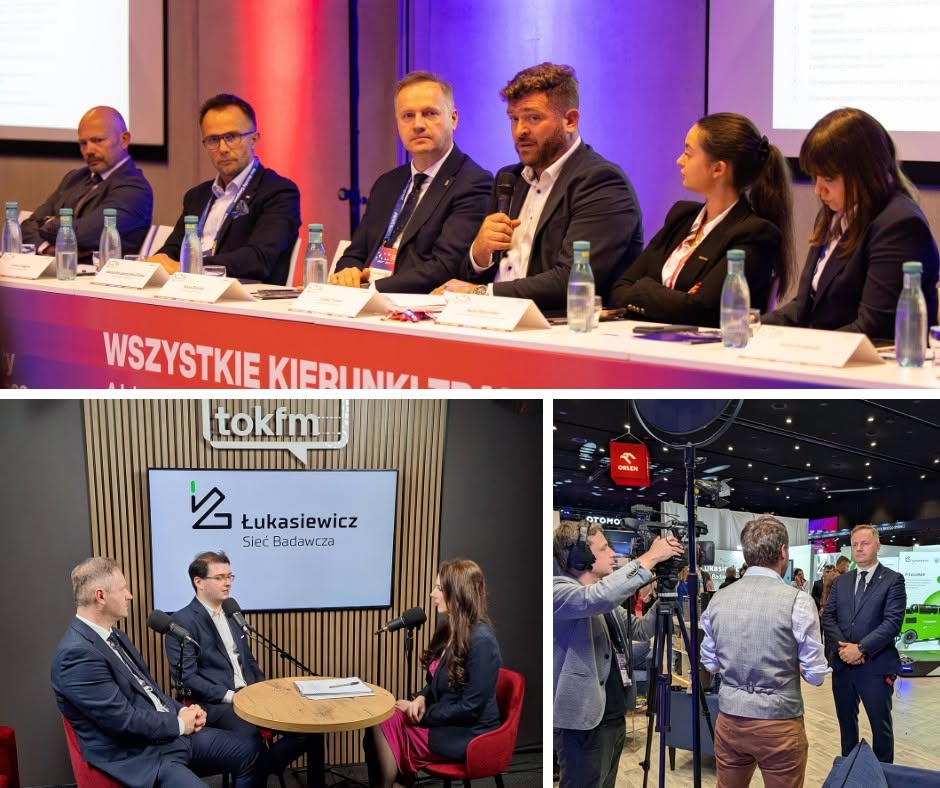
The New Mobility Congress took place September 23–25, 2026, at the International Congress Center in Katowice. At a booth set up jointly with the Łukasiewicz Center, we showcased the technologies we are developing in the areas of autonomous transportation, electromobility, and defense technologies. The Congress also served as the venue for the inauguration of the Technical Committee on Autonomous Transportation, of which our institute is one of the initiators.
The Technical Committee on Autonomous Transportation has begun its work
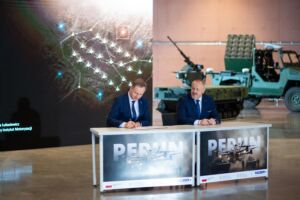
Karol Zielonka, Director of Łukasiewicz – PIMOT, opened the committee’s inaugural meeting. The meeting was co-organized by the Polish New Mobility Association (PSNM) and the Association of Automotive Parts Distributors and Manufacturers (SDCM).
The discussion focused on the barriers currently hindering the implementation of autonomous vehicles. Participants discussed testing methods and technical requirements, legal regulations, cybersecurity, infrastructure, and traffic safety. Each of these topics requires the involvement of various stakeholders: government agencies, manufacturers, research institutions, and independent experts. The committee aims to create a permanent platform for such cooperation. The goal is for solutions for autonomous transportation in Poland to emerge through a shared dialogue, rather than separately within each of these communities.
Automated Research Platform
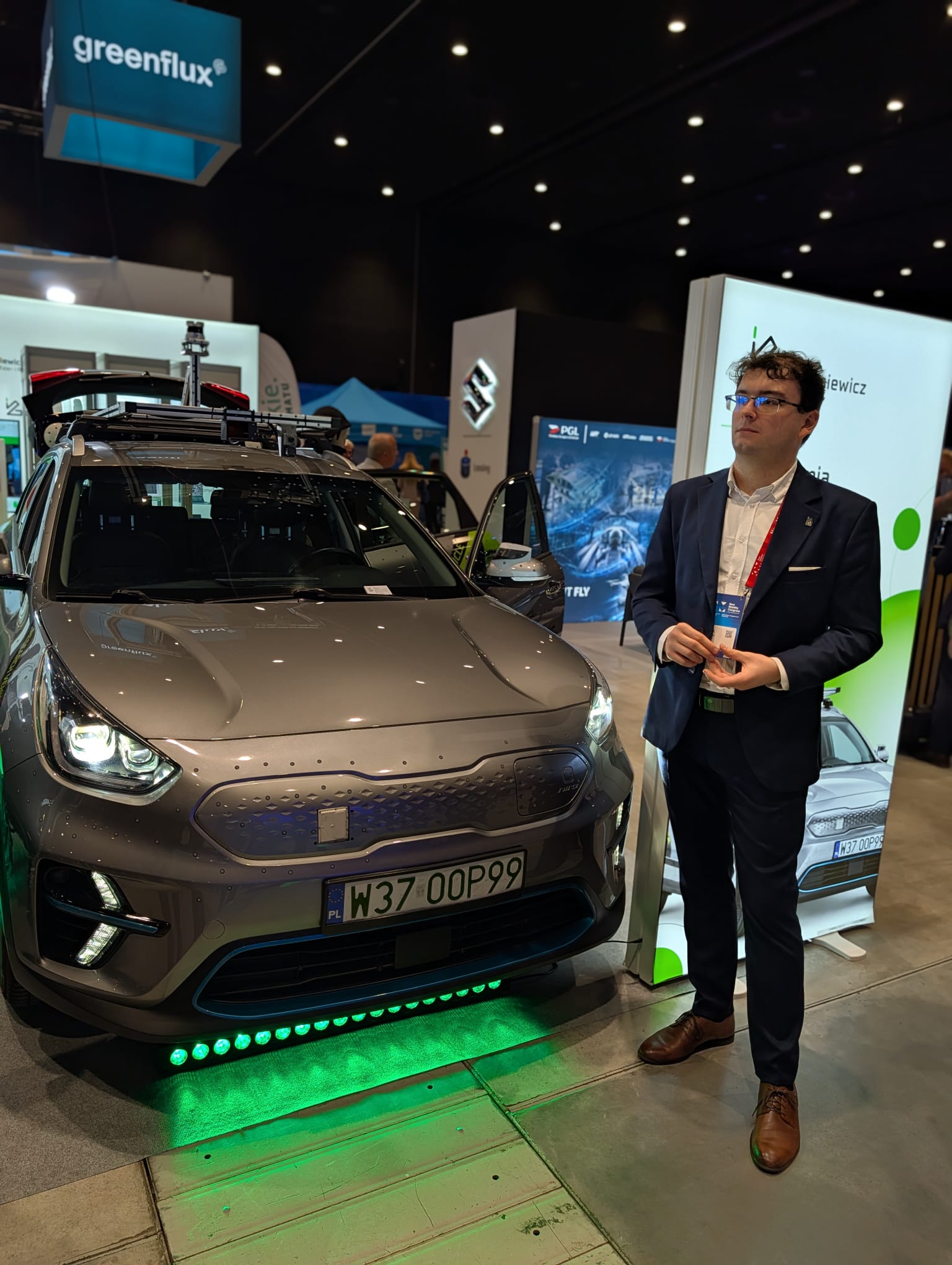
The main exhibit was an Automated Research Platform built on the chassis of a passenger car. We use it to develop and test autonomous control systems under real-world conditions.
The platform is equipped with cameras, lidars, radars, positioning systems, controllers, and actuators. This set of components allows for the study of the entire operational chain of an automated vehicle: how it perceives its surroundings, how it analyzes the traffic situation, how it makes decisions, and how it executes maneuvers.
Cell and Battery Testing Station
In the field of electromobility, we presented a test station for diagnosing cells and batteries. It is designed for workshops and service centers that evaluate, repair, and recondition traction batteries.
Accurate diagnostics allow for a reliable assessment of a battery’s condition. Based on this, a service center can safely plan for the battery’s continued use, repair, or reconditioning. As the number of electric vehicles on Polish roads grows, more and more service companies will need such tools.
ALTRAX – Modular Unmanned Ground Vehicle
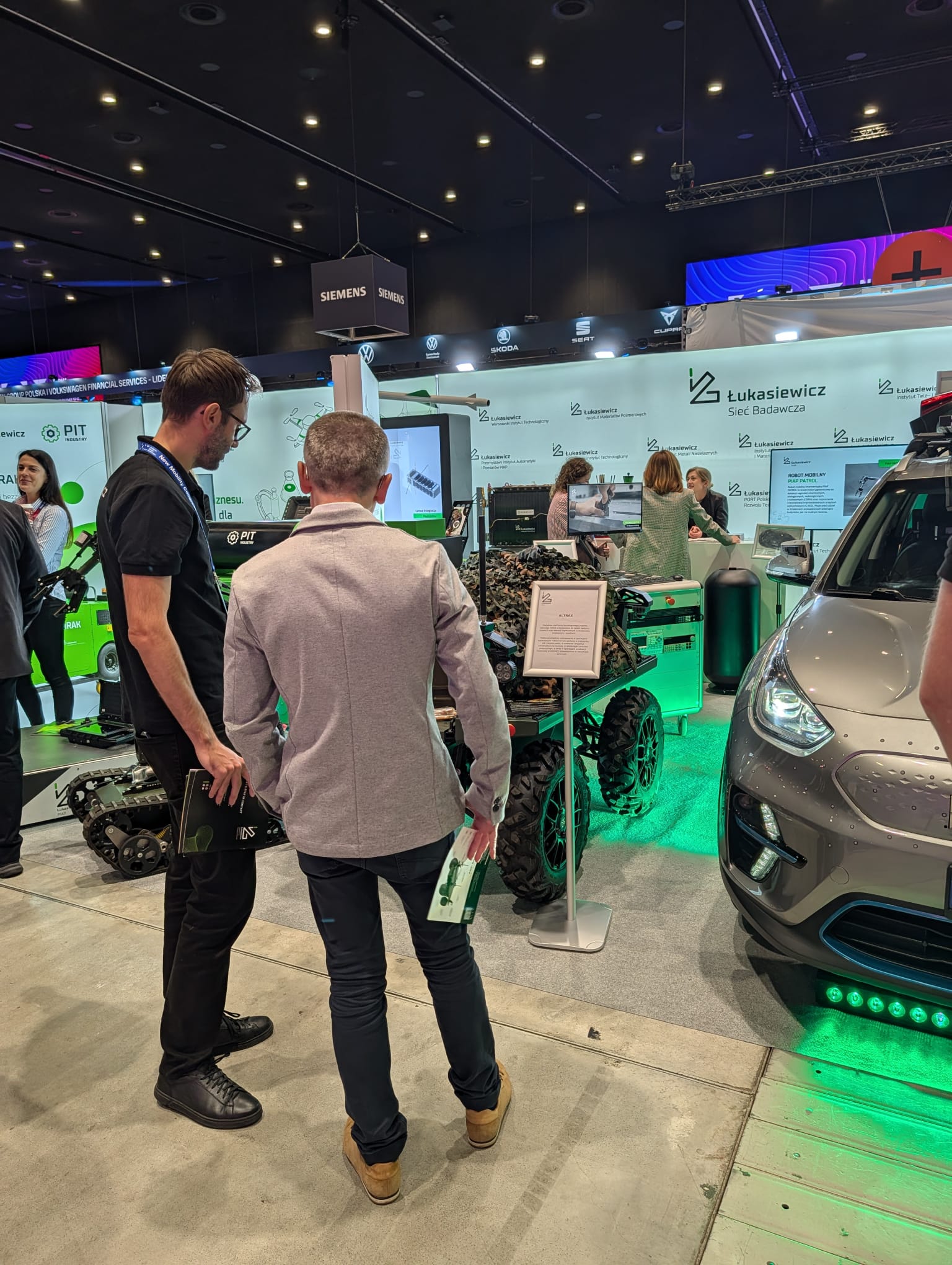
Also on display at the booth was ALTRAX, a modular unmanned ground vehicle (UGV) developed at Łukasiewicz – PIMOT. The platform carries out autonomous and remotely controlled missions. It can be used, among other things, for surveillance, inspection, and logistics tasks. ALTRAX is an example of our work in the field of defense and security technologies.
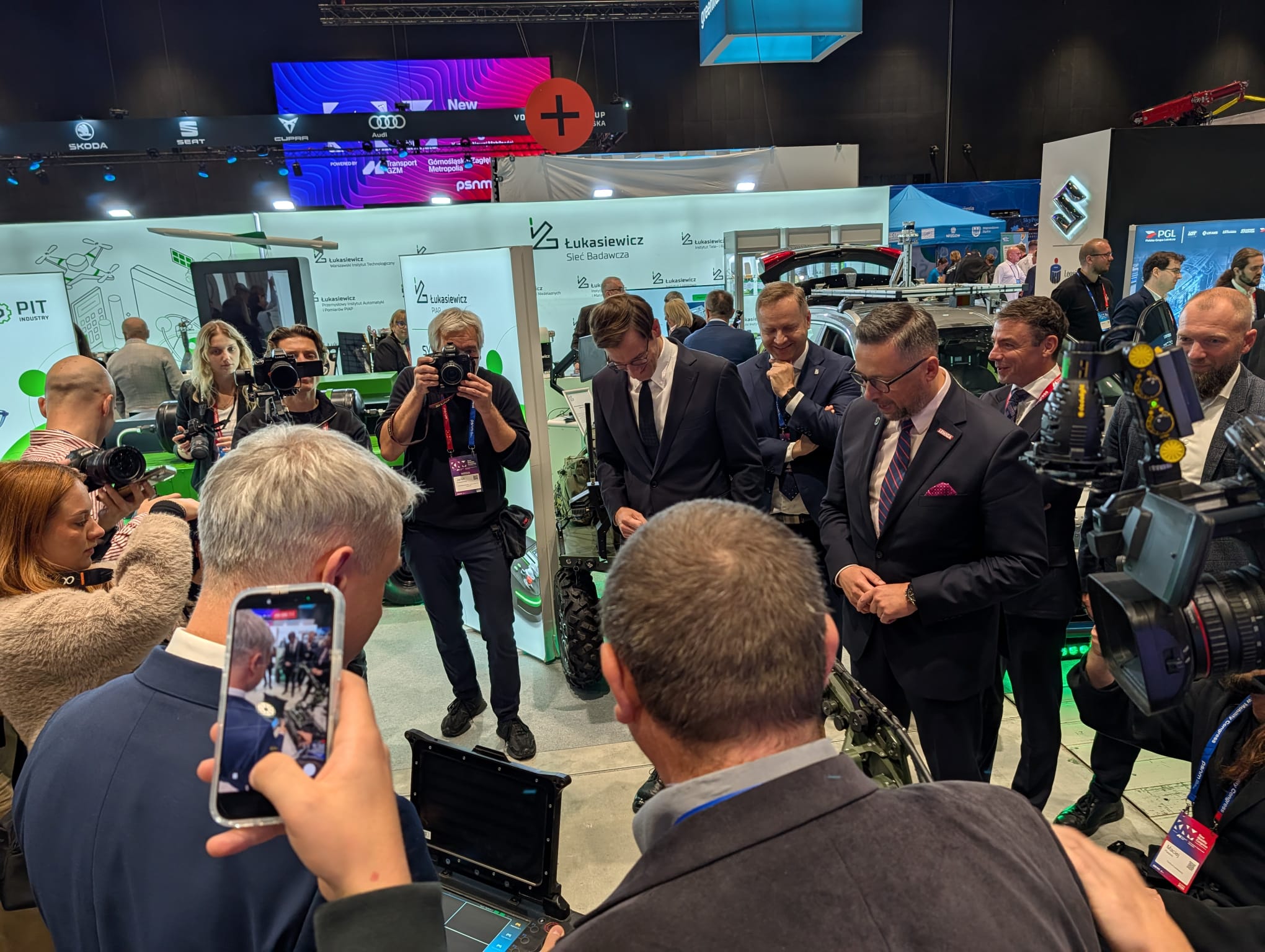
During the conference, our experts spoke with participants about artificial intelligence, control systems, electromobility, unmanned platforms, and simulation. A frequent topic of discussion was what the path from concept to implementation looks like in practice. Łukasiewicz – PIMOT supports this process at every stage: from research and testing, through validation, to preparing the solution for implementation. For companies, this means access to research infrastructure and a team of specialists who are familiar with both the technology and the requirements it must meet before being approved for use. The New Mobility Congress 2026 was an opportunity for us to showcase the results of our work and initiate discussions that we will continue. We would like to thank everyone who visited our booth and participated in the committee meeting.