Łukasiewicz-PIMOT makes its unique research infrastructure available to companies, universities, and startups that want to test and develop their products using specialized equipment without having to invest in their own facilities.
Please feel free to contact us—we’d be happy to advise you on which position best suits your needs, and our experienced research staff will support you in carrying out even the most ambitious research projects.
Electronics and Acoustics Laboratory
Manager Weronika Zaklika
Electromagnetic Compatibility Test Station Set
Electromagnetic compatibility testing of objects, particularly automotive products, vehicle chargers, etc., with regard to electromagnetic emissions and immunity. The test facilities enable testing in the following areas, among others:
- radiated and conducted phenomena
- resistance to electrostatic discharge
- resistance to SURGE and BURST pulses
- measurement of harmonic and flicker emissions
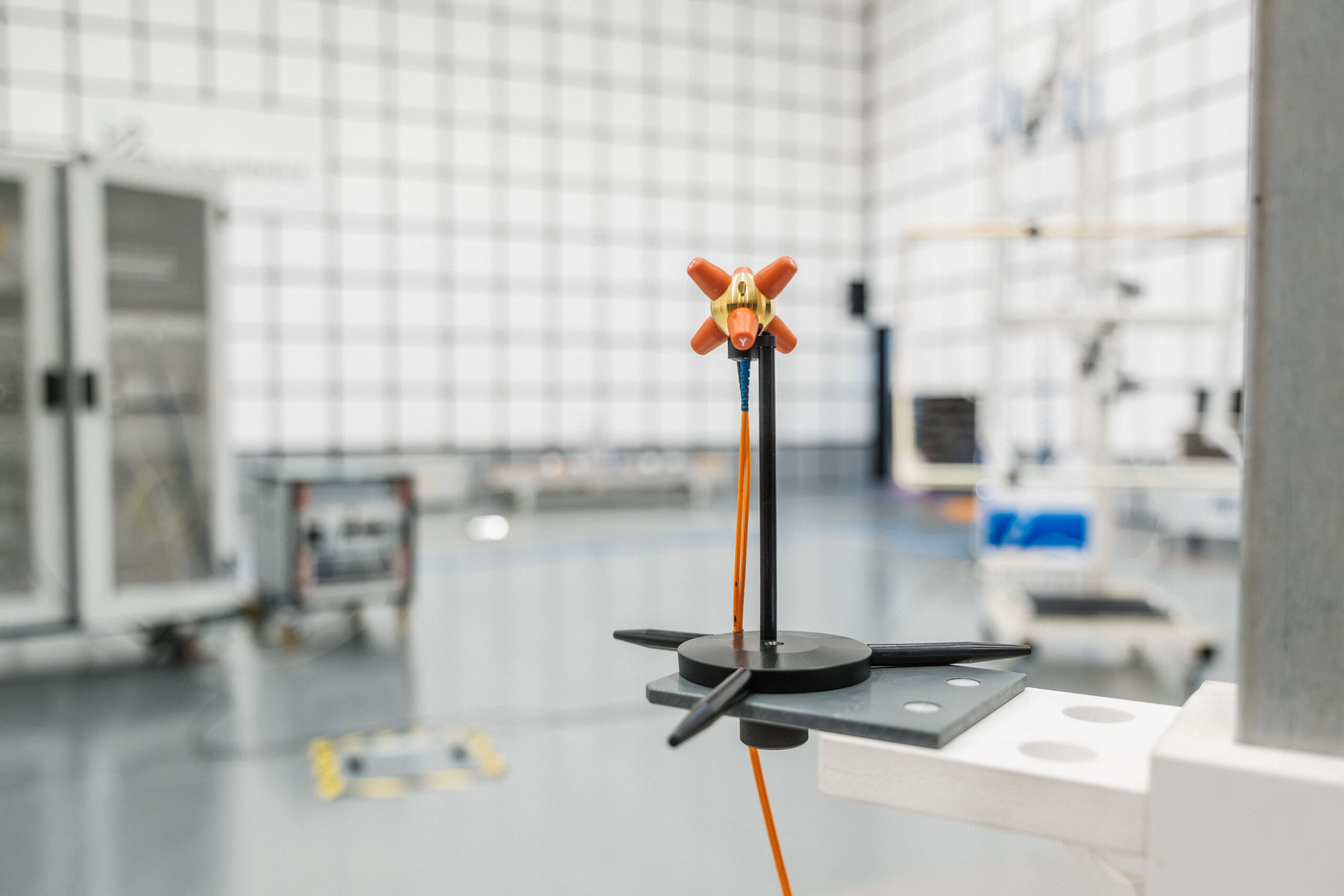
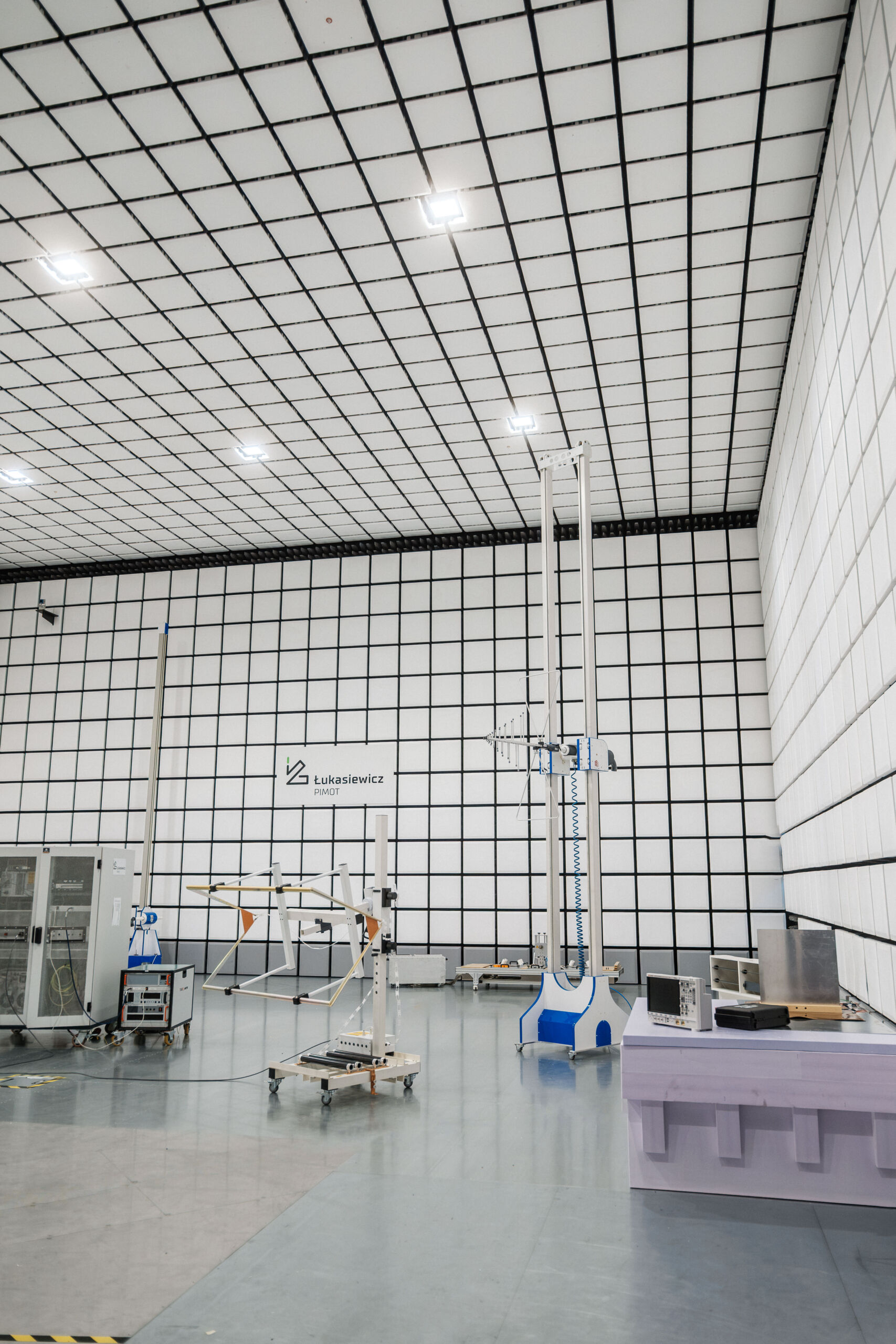
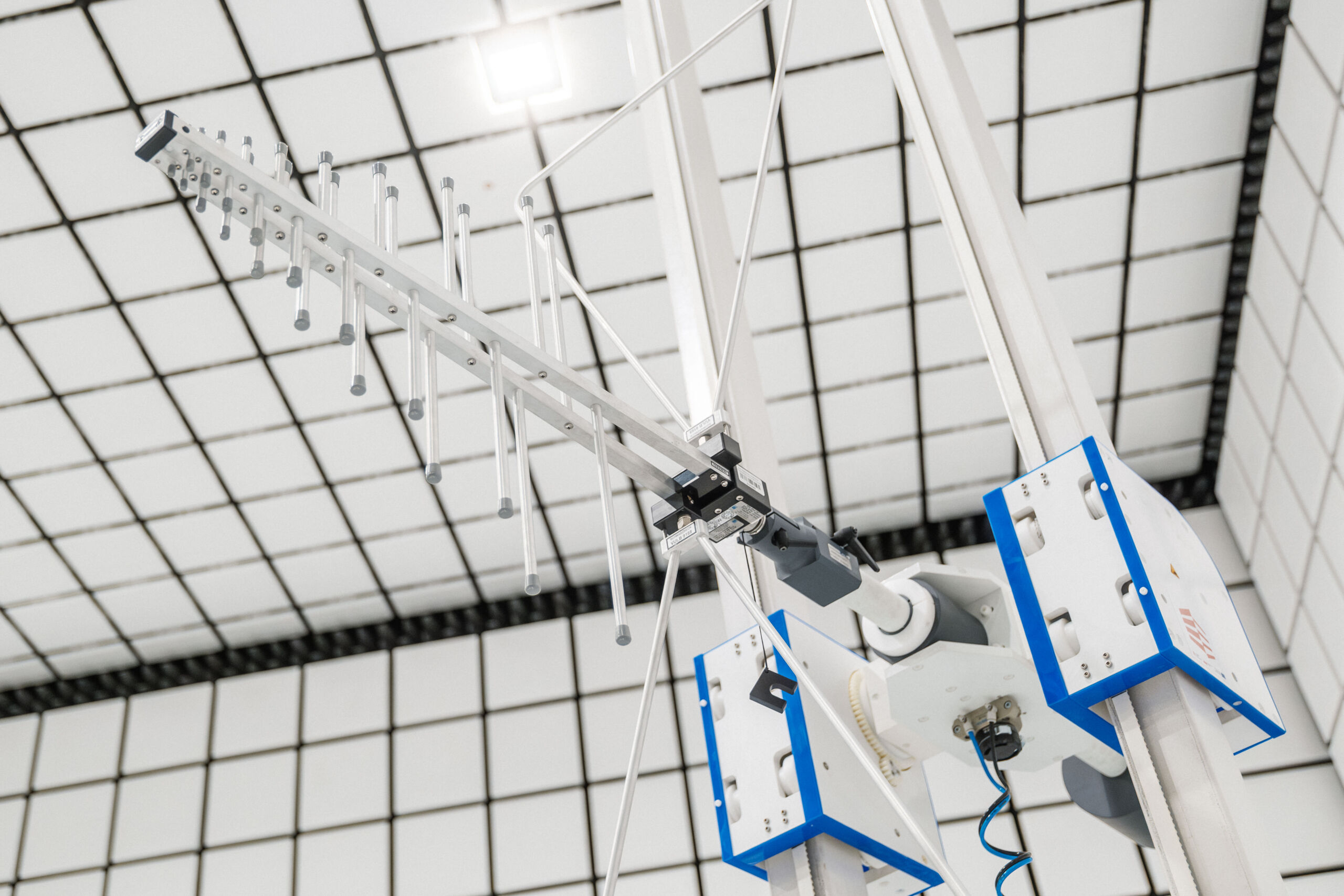
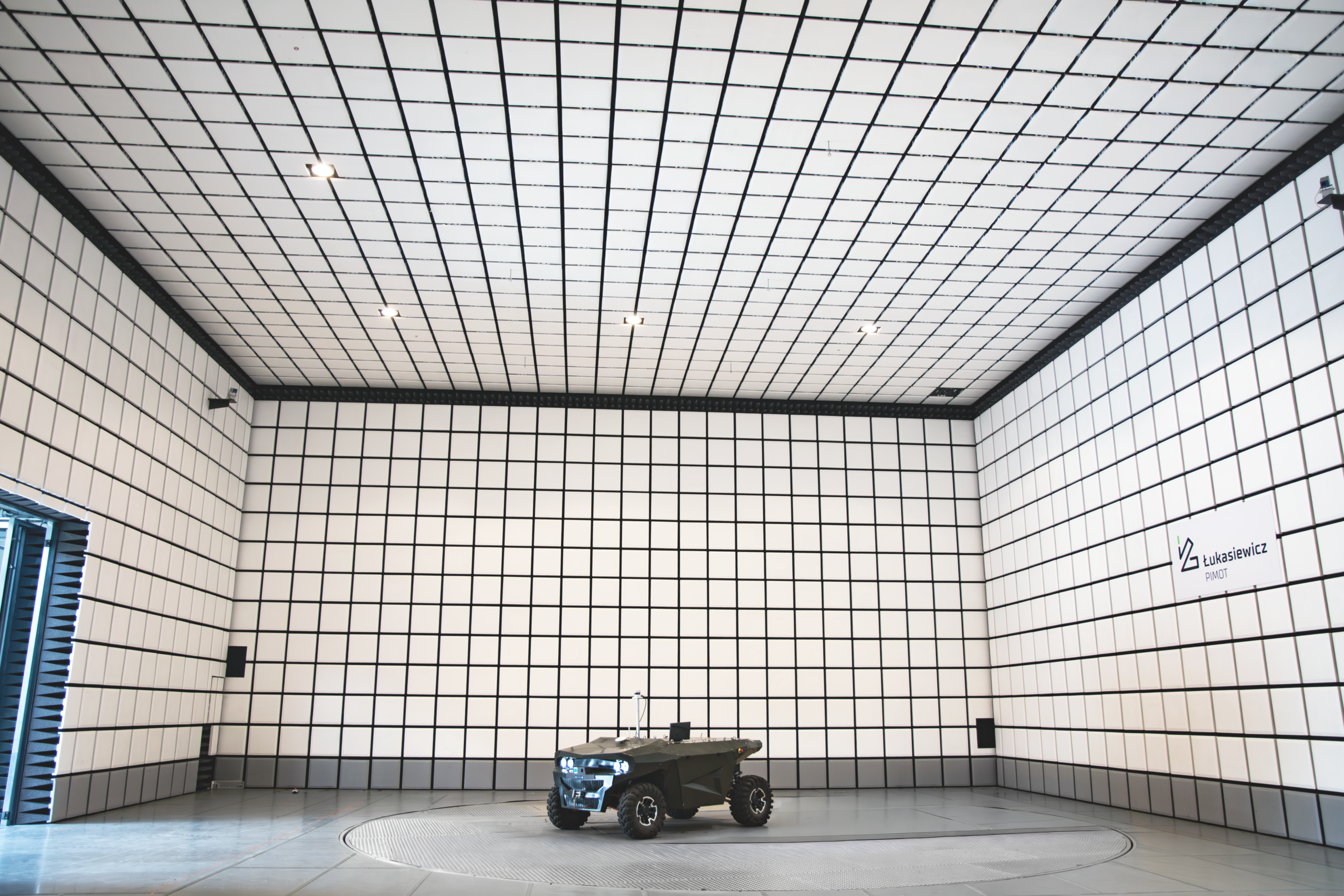
SAC-10 Semi-Anechoic Chamber
Electromagnetic compatibility testing of equipment to assess its immunity to electromagnetic interference and its level of interference emissions, which may affect the operation of other systems. The chamber allows measurements to be taken from a distance of 10 m.
Electrodynamic exciter with an automatic sample evacuation system
Testing of structures, particularly traction energy storage systems, for vibration resistance. These tests may be conducted in conjunction with the use of a climate chamber.
A climate chamber that works in conjunction with an exciter
Testing of equipment, particularly traction energy storage systems, for resistance to high and low temperatures and thermal shock. The tests may be conducted with the simultaneous use of a vibration exciter.
Vehicle Testing Laboratory
Manager
Hubert Kowieski
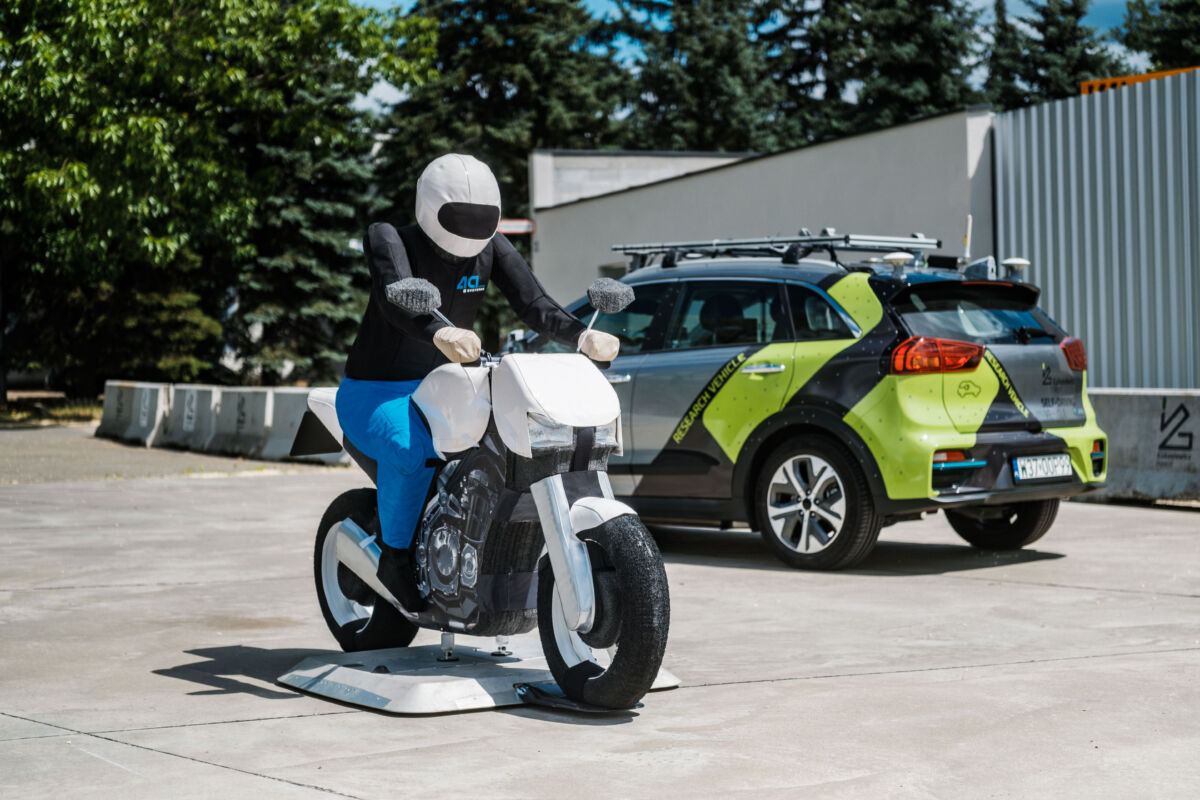
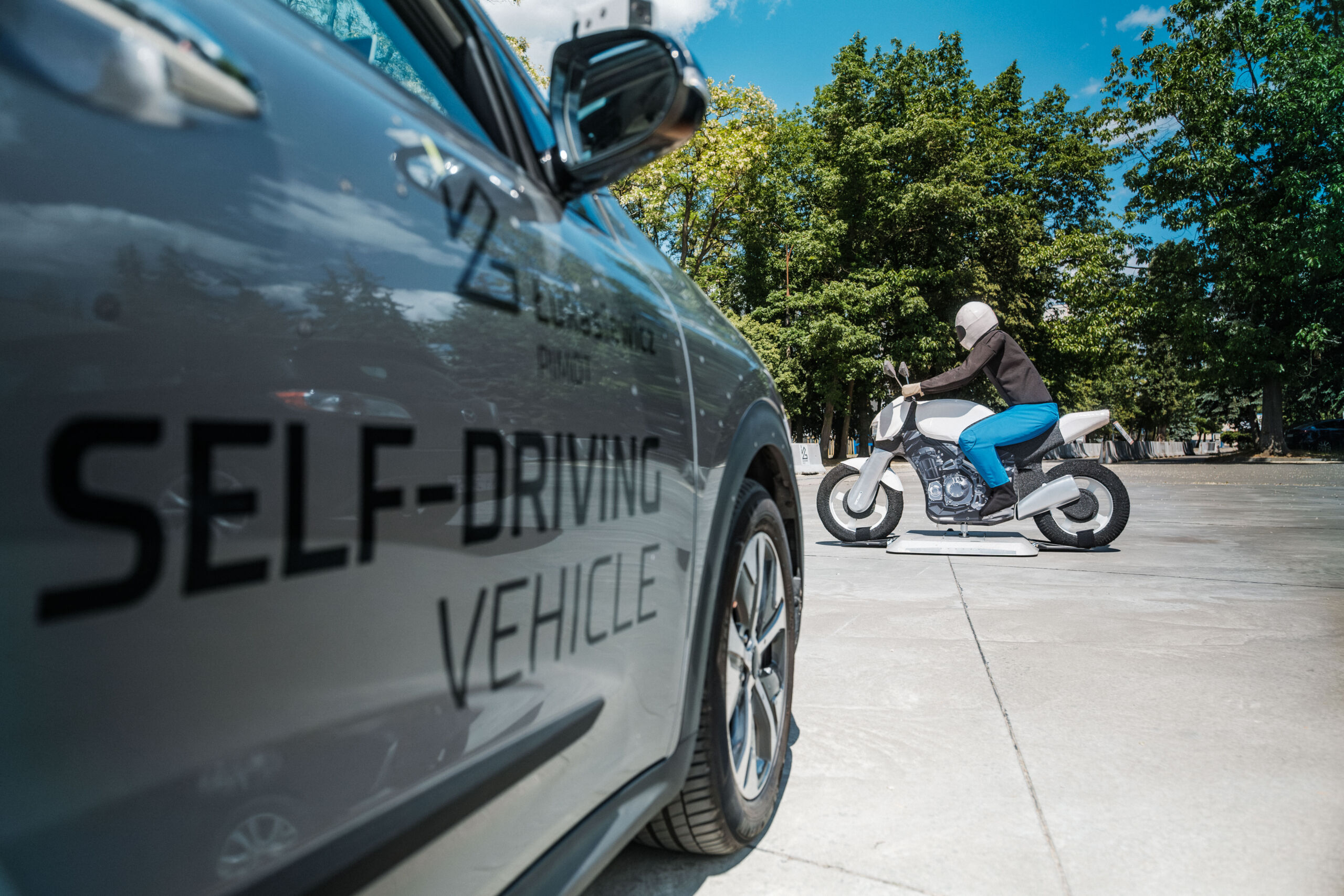
UFO (Ultra-Flat Overrunable) Robotic Platforms
Testing of vehicles for advanced driver-assistance systems (ADAS) in C2C (car-to-car) and VRU (vulnerable road users) traffic scenarios.
Driver robot
Testing of vehicles for handling and advanced driver-assistance systems (ADAS).
Dynamometric inertia test stand for testing pneumatic brakes
Testing of friction pairs in disc and drum pneumatic braking systems.
Dynamometric inertia test stand for testing hydraulic brakes
Studies of friction pairs in disc and drum hydraulic braking systems.
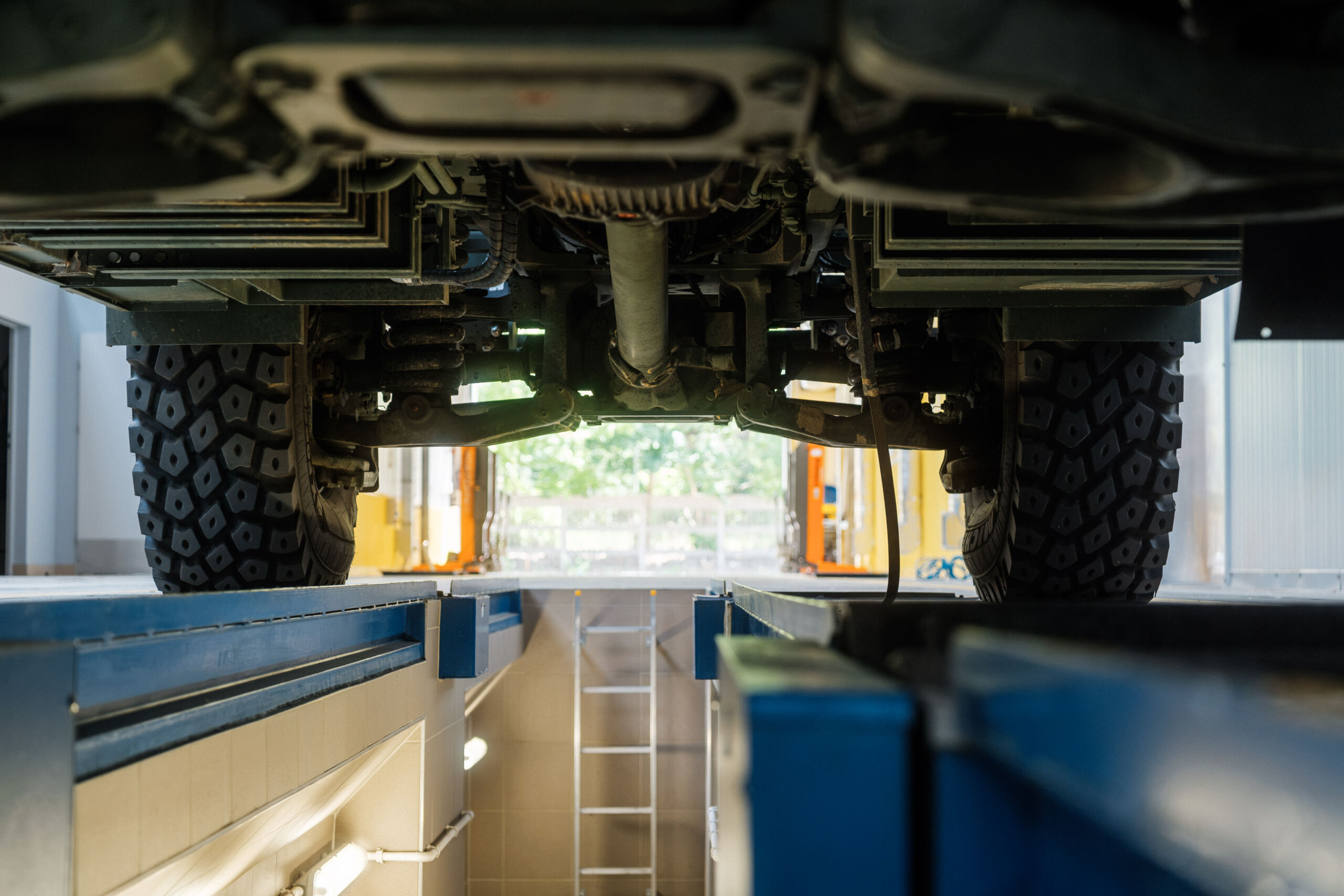
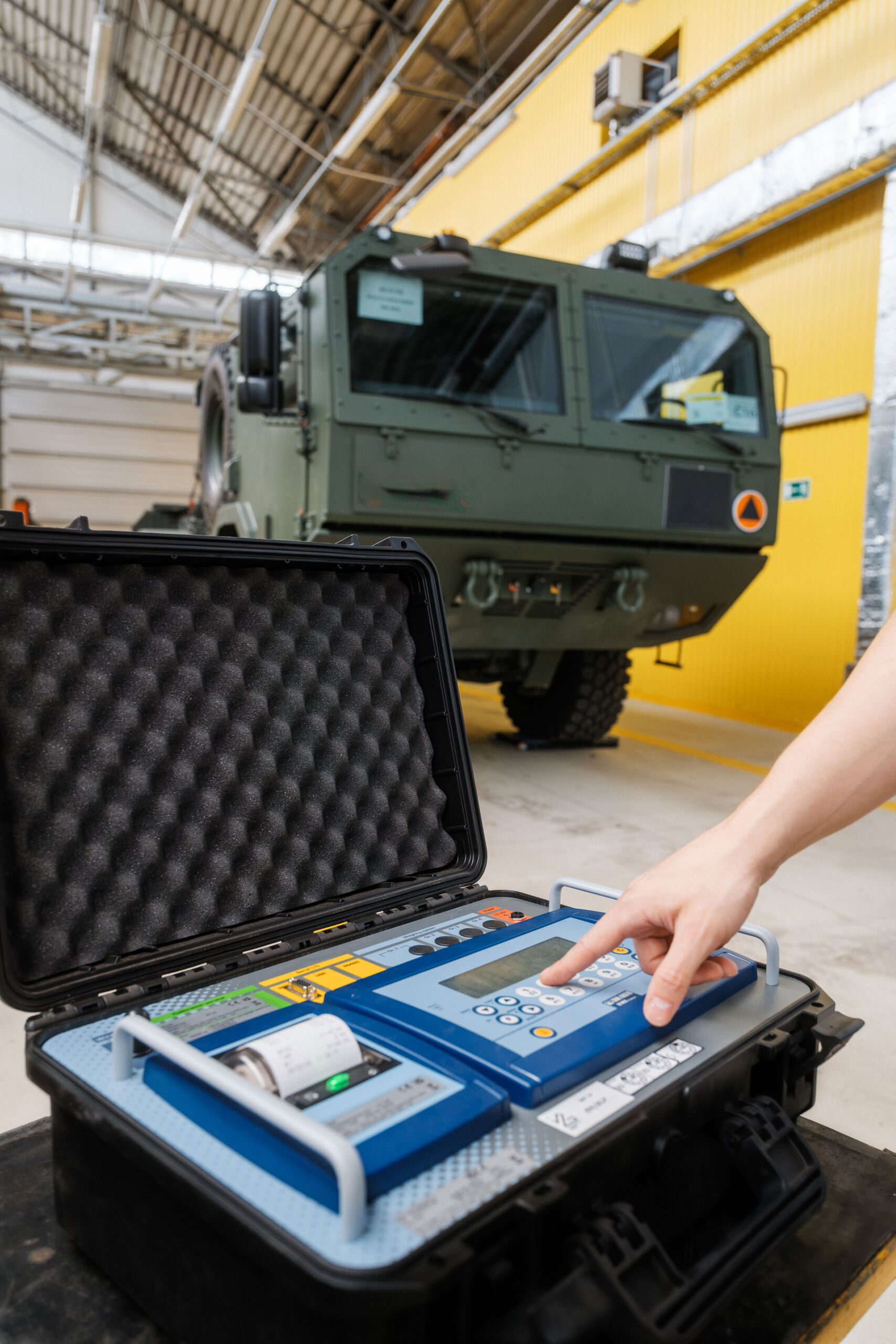
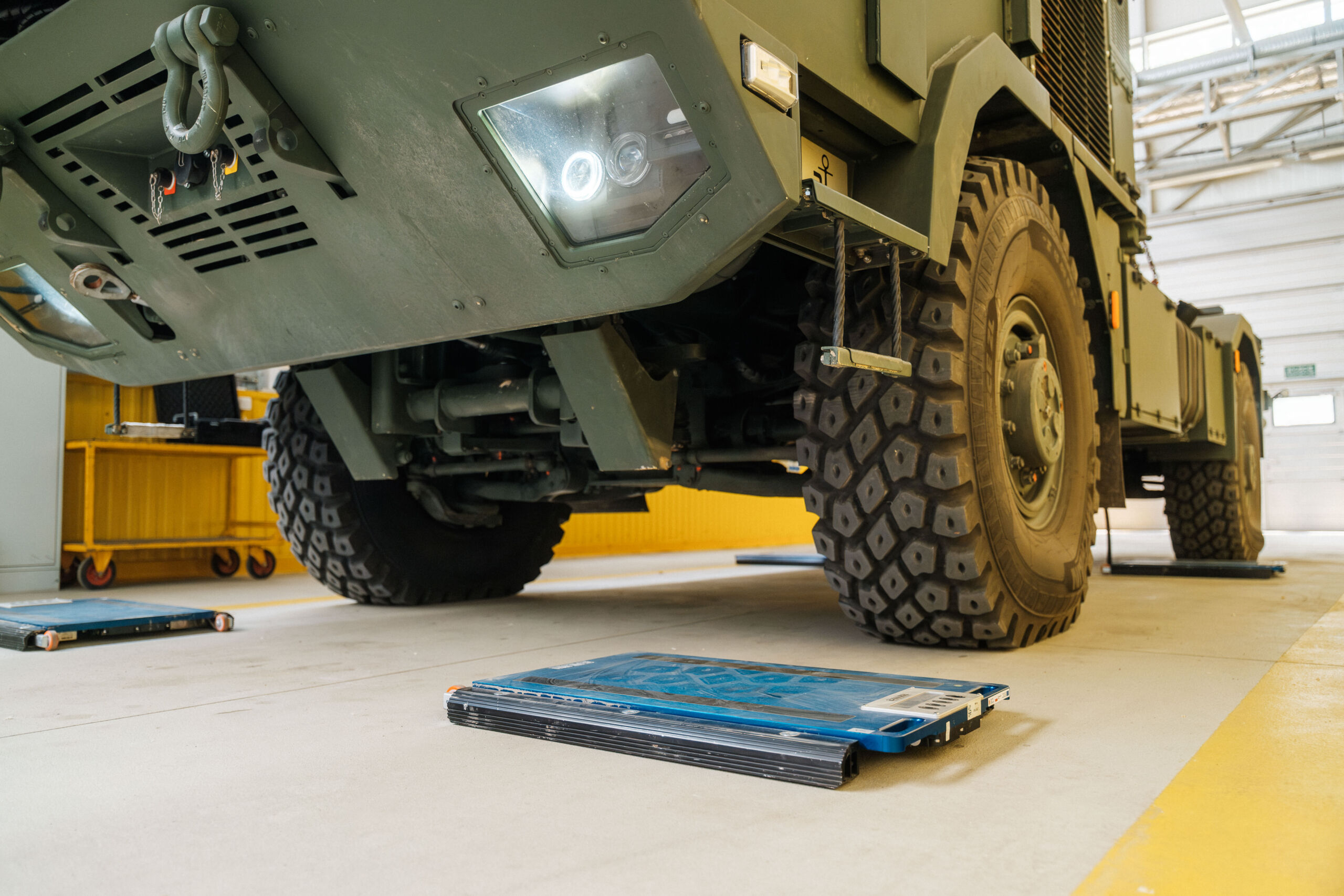
Test stand for static lateral stability testing
Vehicle testing to determine the limiting lateral roll angle and assess static lateral stability.
Vehicle Safety Laboratory
Manager
Przemysław Pająk
Test benches for simulating dynamic phenomena
Inspections of facilities, including in the following areas:
- passive safety of vehicles and their equipment, including special-purpose vehicles
- passive safety features of improved child restraint systems
- Strength of truck bodies and structural components
The test stations enable testing of resistance to mechanical impacts and are equipped with a system for recording deceleration and a system for the kinematic analysis of rapidly changing phenomena using high-speed cameras.
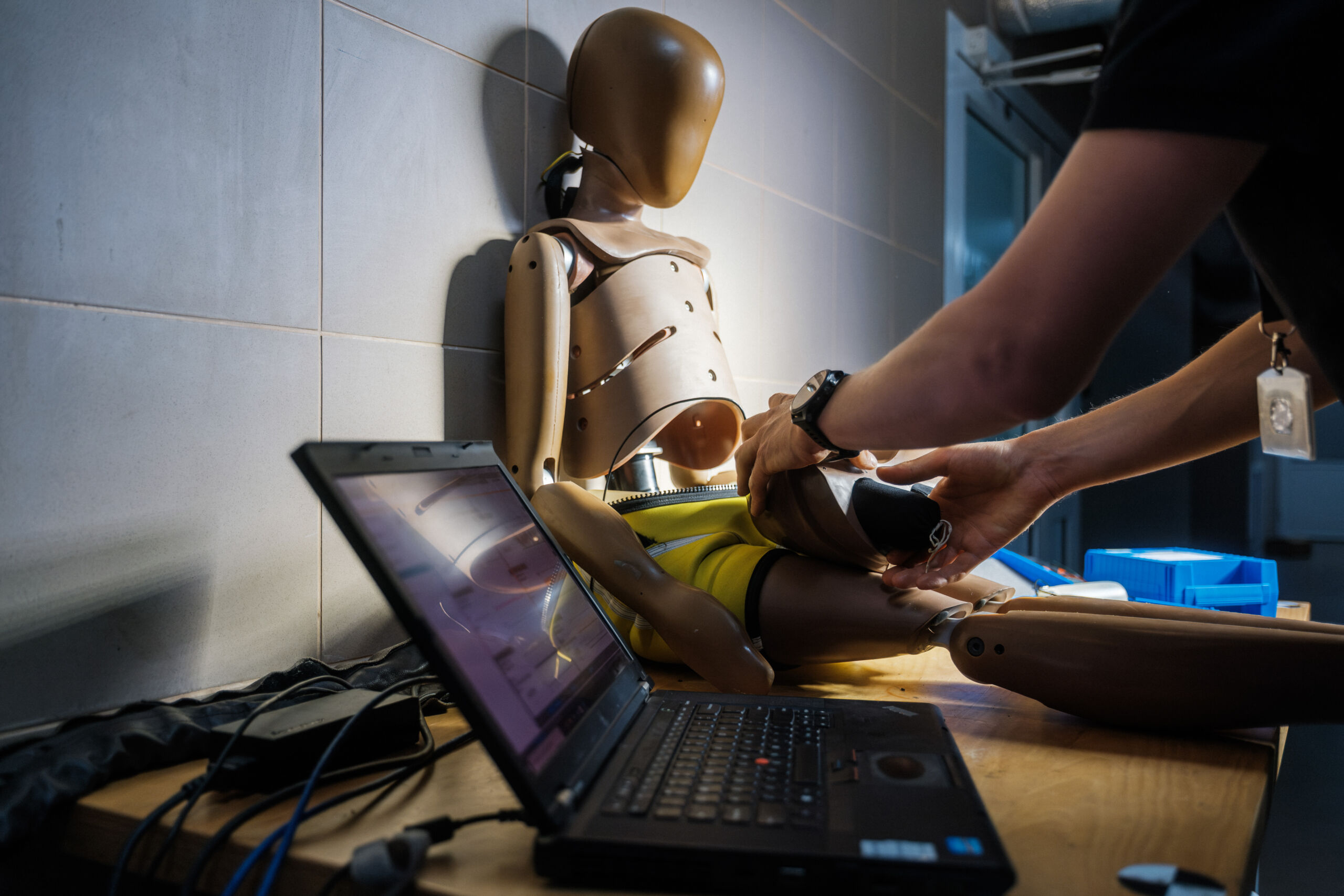
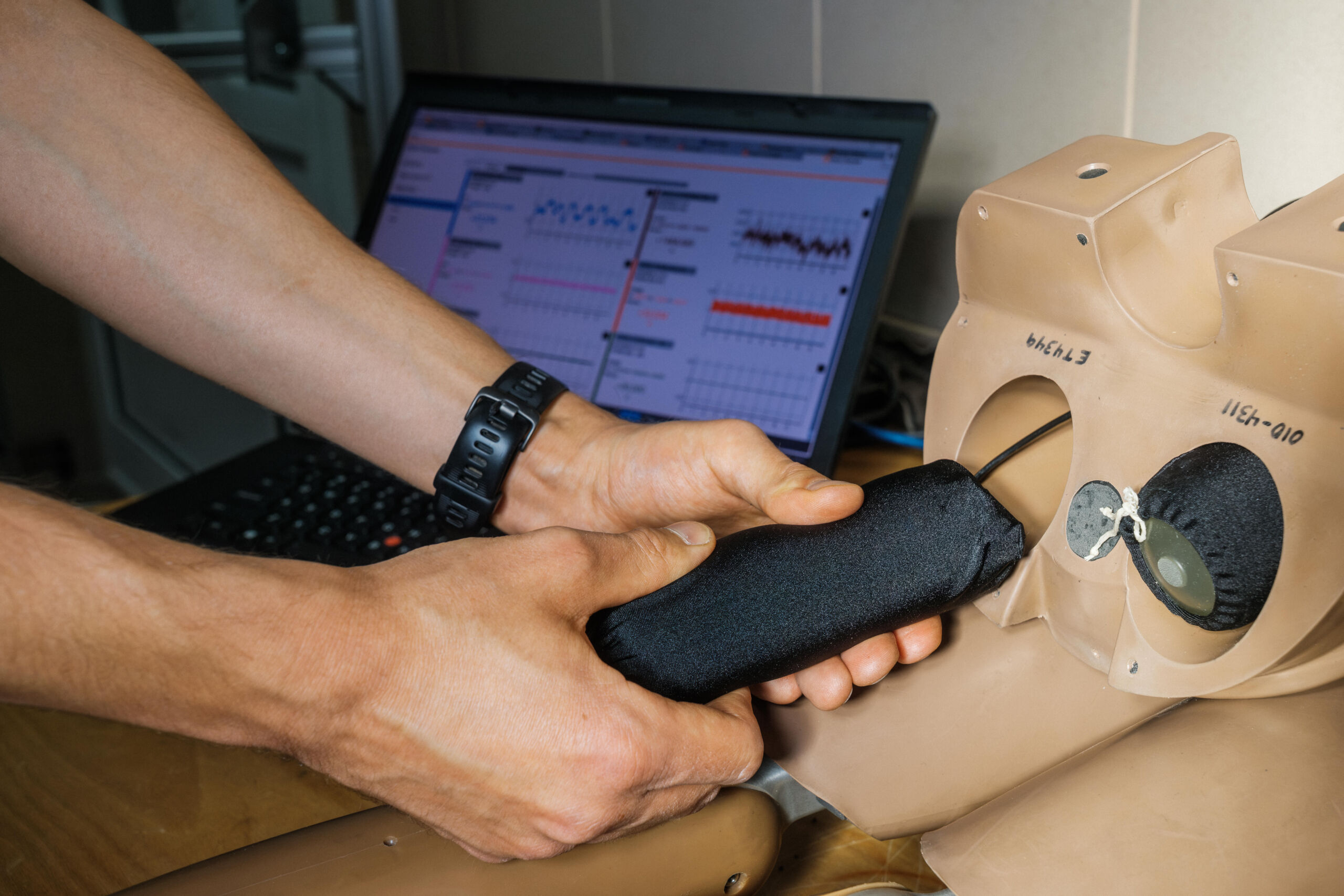
Set of anthropomorphic mannequins
A set of equipment designed for the biomechanical analysis of traffic accidents and for laboratory testing of passive safety.
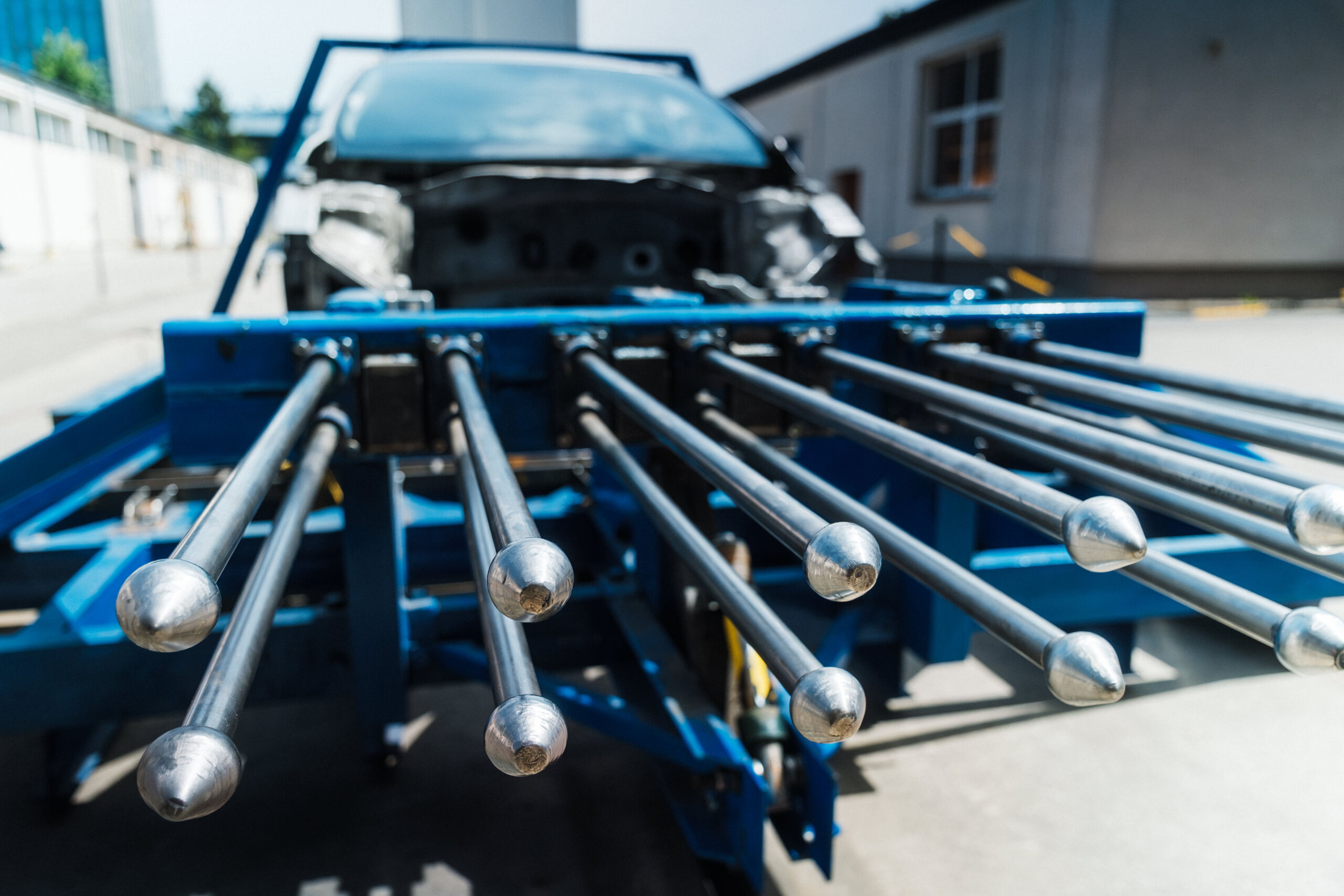
Test facility for vehicle collisions with road barriers and other structures
Safety testing of road support structures and road infrastructure components.
Mechanical Integrity Test Station
Safety testing of structures, particularly energy storage systems (REESS) designed to power road vehicles, with regard to their resistance to compressive forces (crushing).
Fire Resistance Test Station
Safety testing of facilities, particularly energy storage systems (REESS) designed to power road vehicles, with a focus on fire resistance.

Simulation Research Laboratory
Manager Patryk Kawałek
Climate chamber integrated with the MAST test stand
Testing of objects, particularly vehicle components and assemblies, for resistance to low and high temperatures. The tests may be conducted using a multi-axis simulation table.
MAST – Multi-Axis Simulation Table
Testing of objects, particularly vehicle components and assemblies, for resistance to vibration and shock. These tests may be conducted in conjunction with a climate chamber.
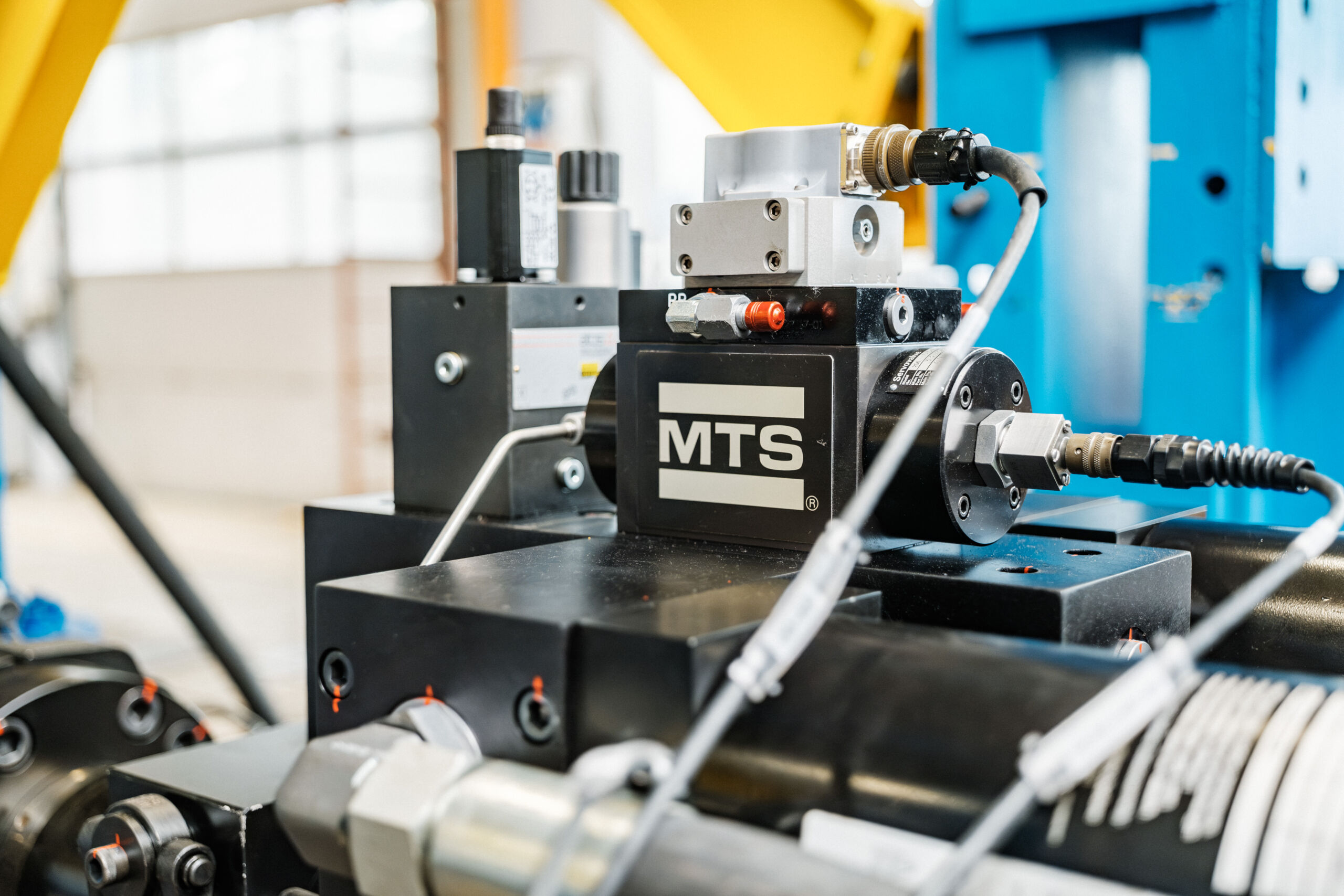
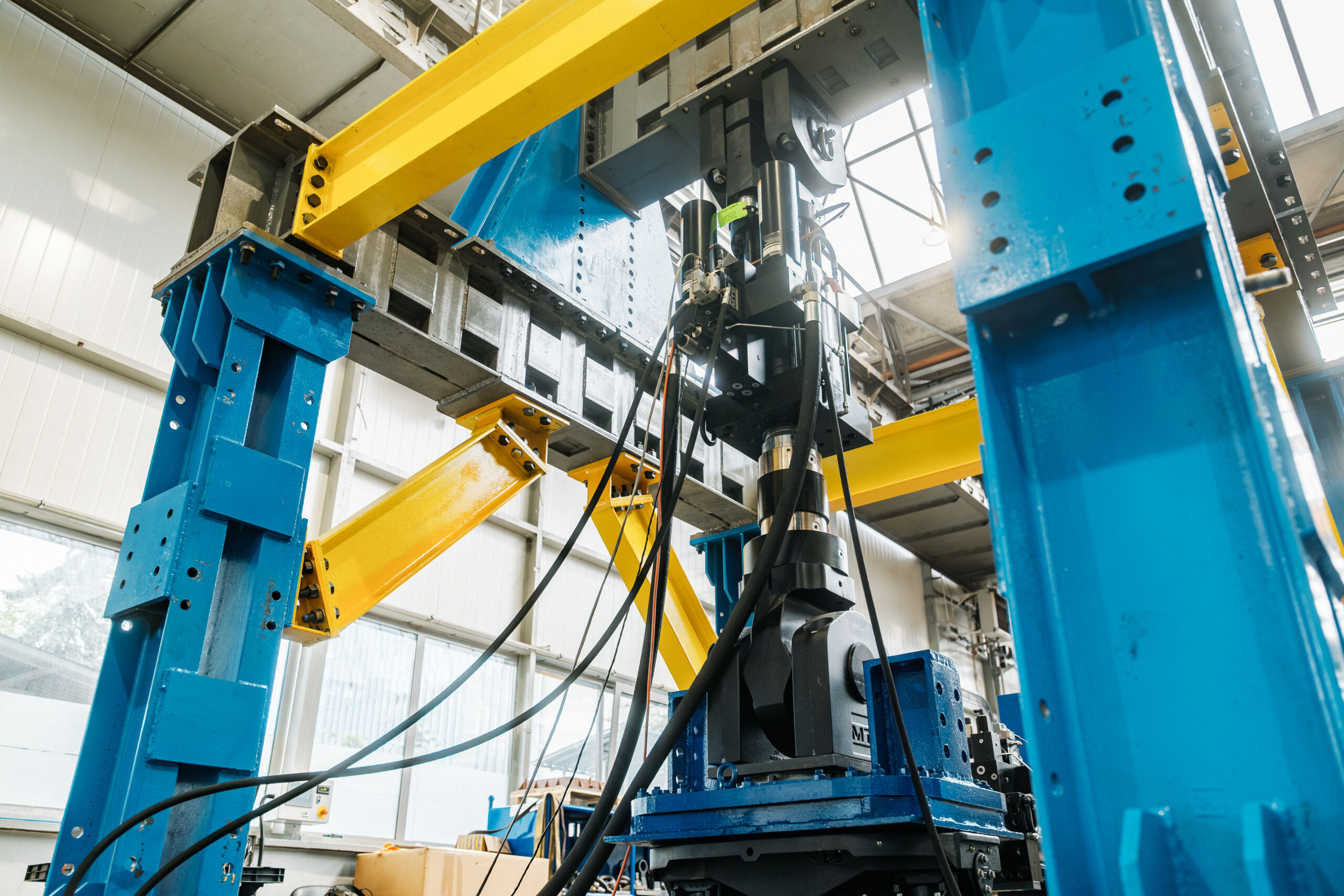
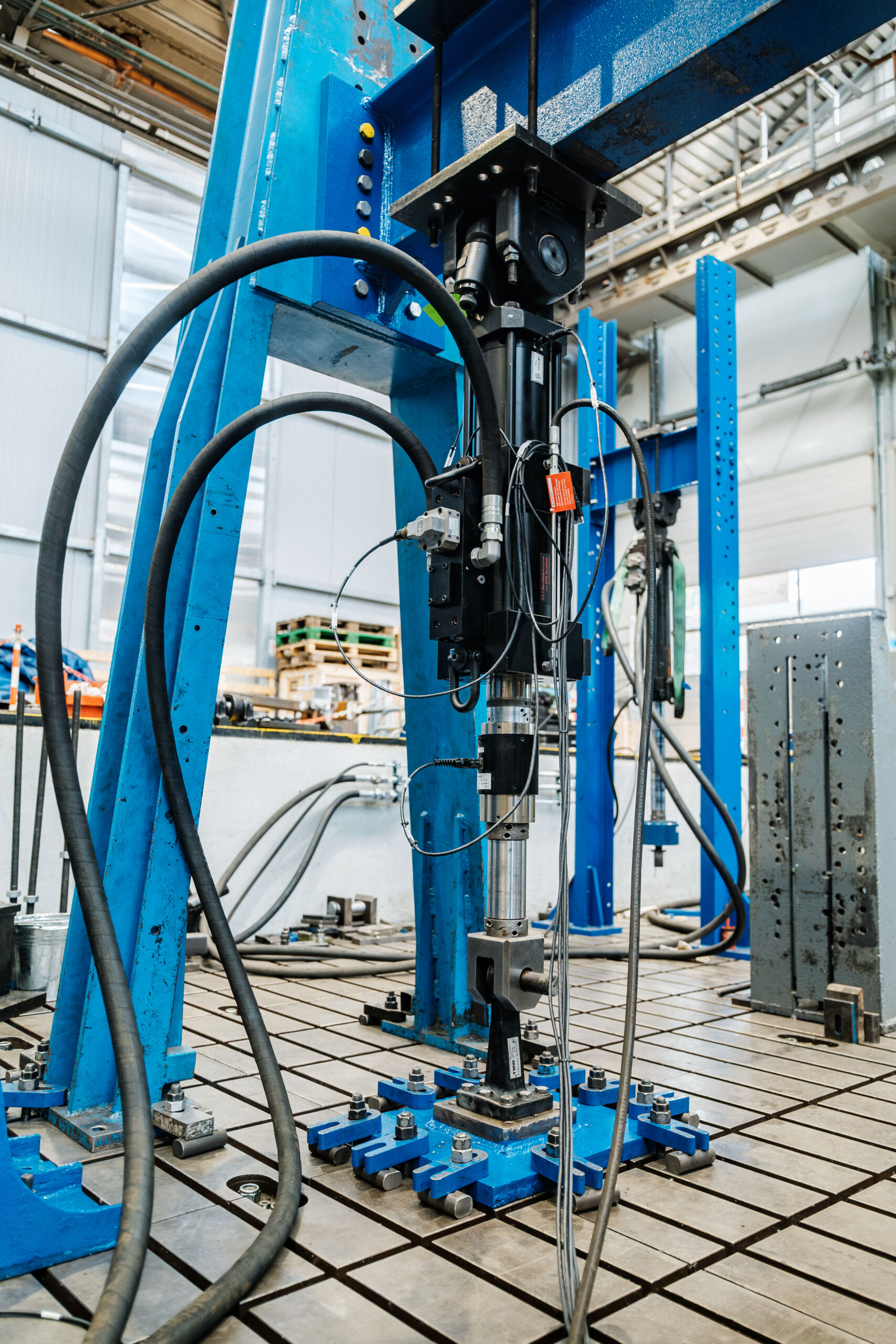
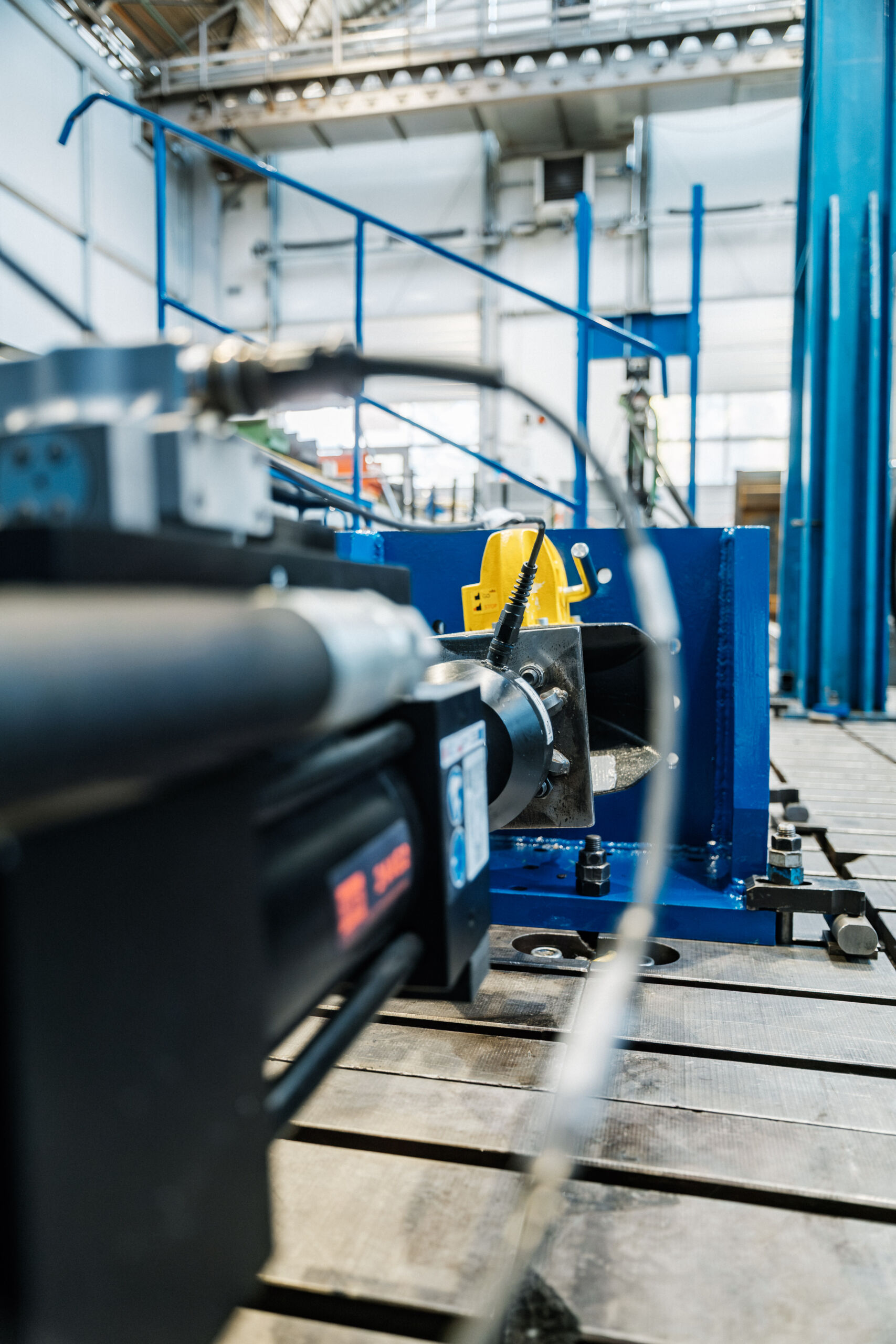
A set of electrohydraulic test stands for testing resistance to dynamic and static loads up to 1,000 kN
Testing of objects, particularly vehicle components, assemblies, and load-bearing structures, with regard to their resistance to dynamic and static loads.
Automotive New Technologies Research Group
Manager Konrad Małek
dSpace Hardware-in-the-Loop System
HIL (Hardware-in-the-Loop) testing of electrical components in powertrain systems.