Vehicle Safety Laboratory
Manager
Przemyslaw Pajak
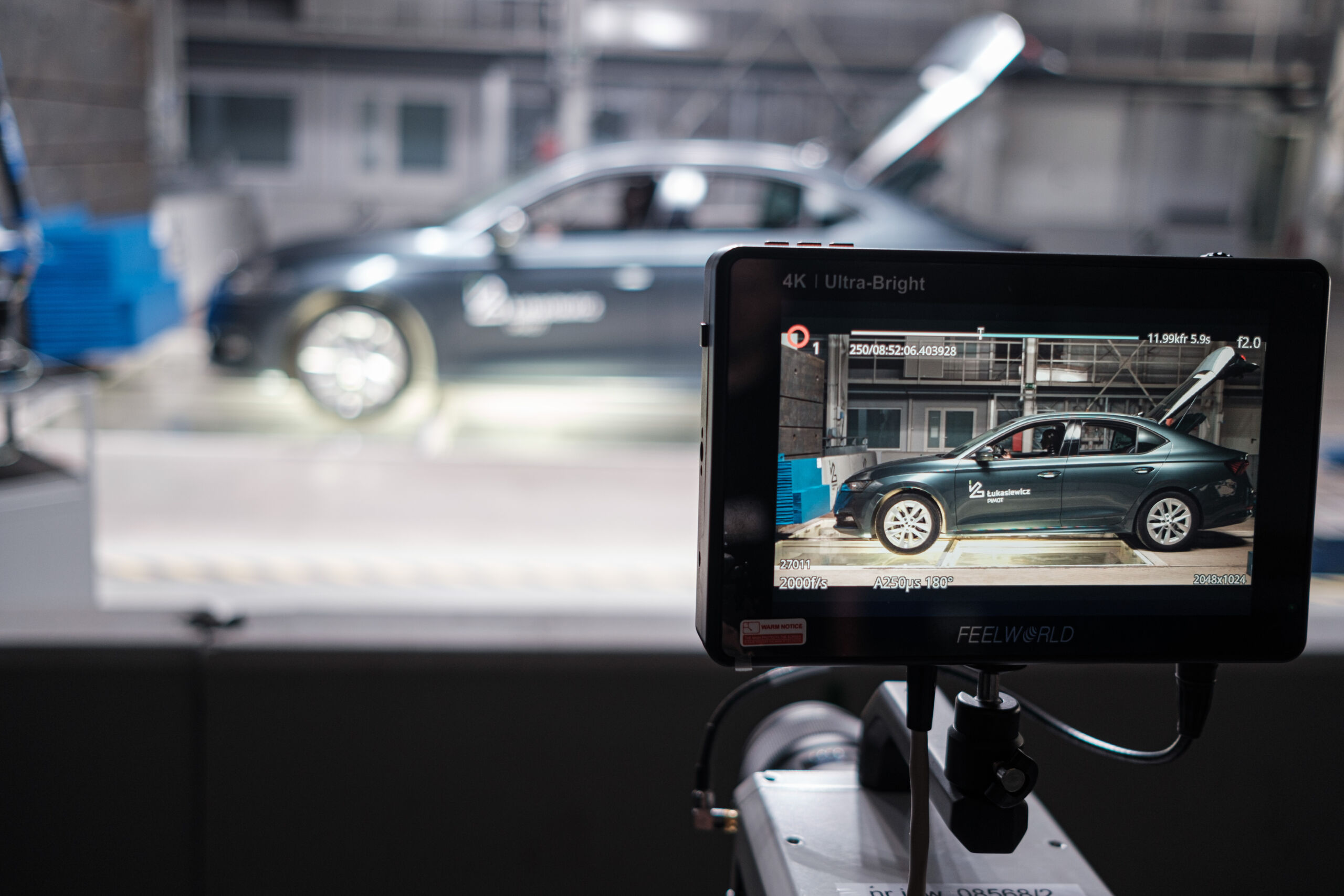
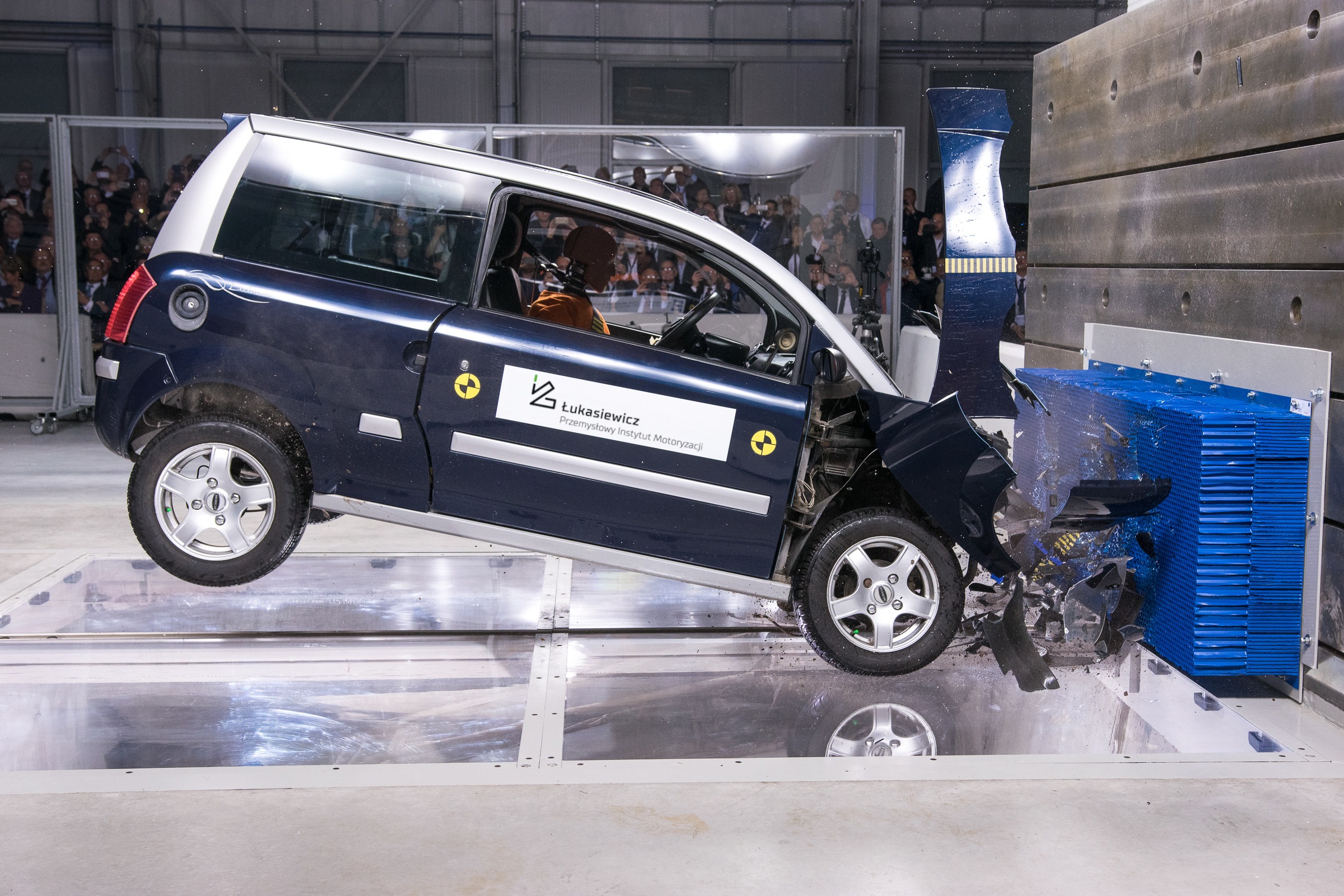
The laboratory specializes in passive safety testing, carried out in accordance with national and international standards and based on individual customer requirements. Activities cover a wide range of issues related to automotive and road infrastructure.
Key areas of research include:
- Passive safety of vehicles and their equipment, including special vehicles (including ambulances, civil defense vehicles, among others),
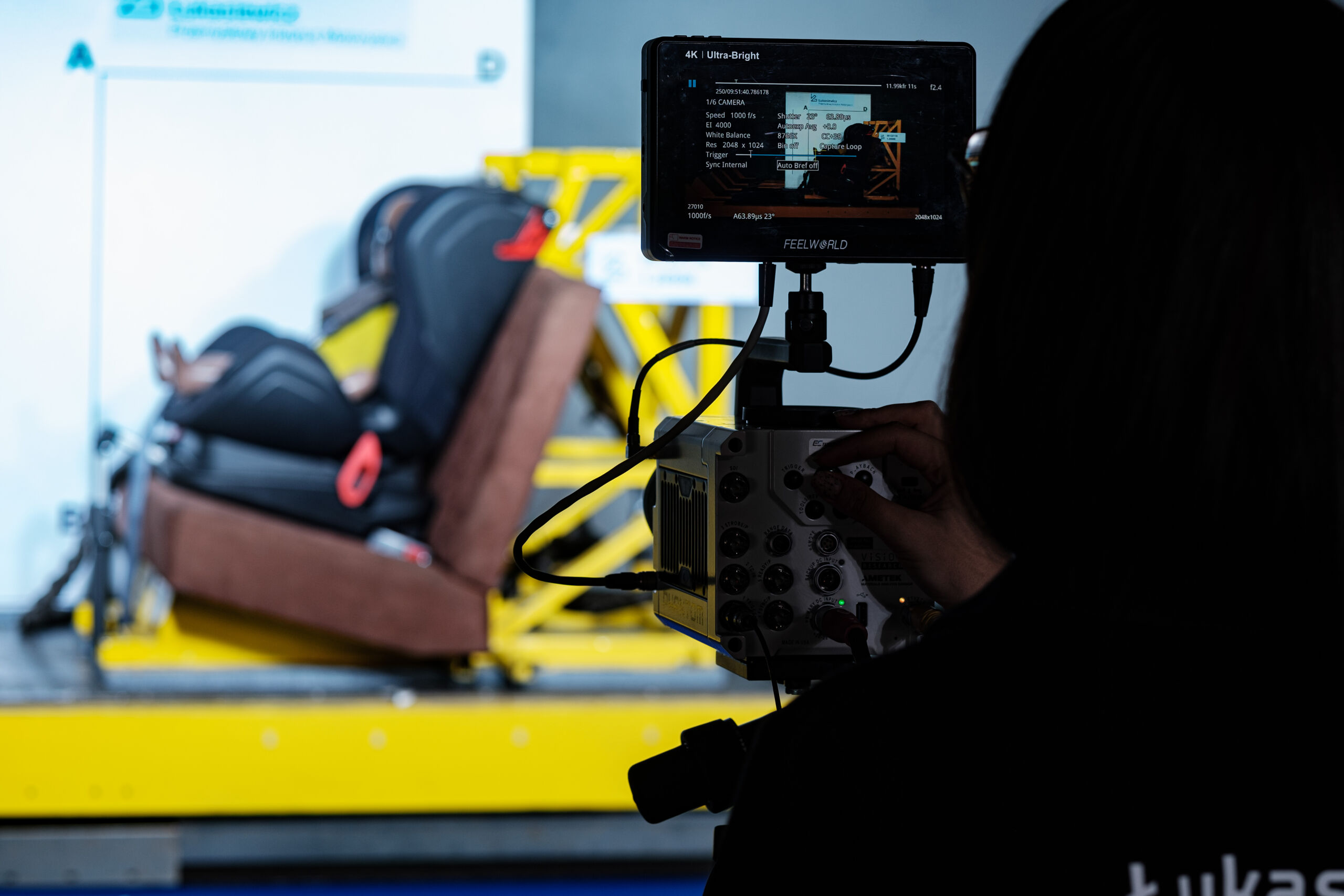
- Passive safety of improved child restraints,
- Safety of road support structures and road infrastructure elements,
- Strength of truck bodies and structural components,
- Analysis of high-speed phenomena using high-speed cameras and advanced data acquisition systems,
- safety of energy storage systems (REESS) designed to power road vehicles,
- Safety (flammability and meltability) of materials used in automotive applications,
- The strength of components and accessories used to secure cargo.
Highlights of research infrastructure and measurement equipment:
- dynamic crash hall test stands designed for testing improved child restraints and special vehicles, among other things,
- Dynamic test stands under field conditions designed for road infrastructure testing, among other things,
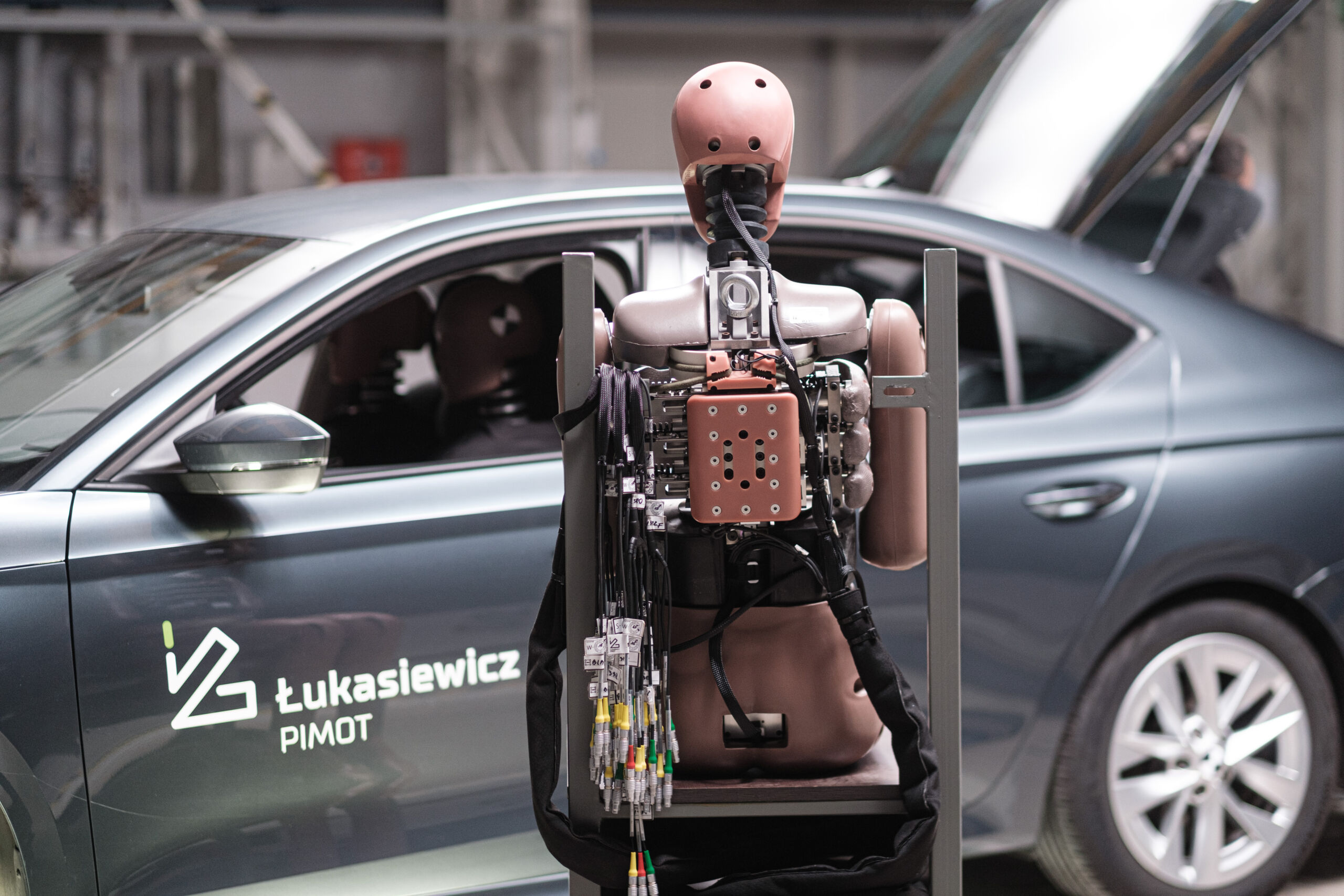
- A set of advanced anthropomorphic dummies designed for biomechanical analysis of traffic incidents,
- Data acquisition systems with advanced measurement paths for measuring forces, speeds and dynamic quantities,
- A set of high-speed cameras for cinematographic analysis of high-speed phenomena,
- A set of test stands for testing traction batteries for flame resistance, dynamic phenomena and mechanical integrity.
Authorizations and certifications
The laboratory conducts research in accordance with the documents presented in the scope of accreditation issued by the Polish Accreditation Center. Services provided as part of laboratory activities are carried out in full compliance with the requirements of PN-EN ISO/IEC 17025:2018-02, which is a guarantee of reliability, high quality and credibility of the results obtained.
In addition, within the framework of the powers granted by the Minister of Transport, the Laboratory carries out tests for the approval of a type of vehicle, parts or their equipment, necessary to obtain a certificate of approval within a certain range.
Lukasiewicz Research Network – Industrial Automotive Institute, in accordance with the announcement of the Minister of Infrastructure, also conducts tests to confirm compliance with the Technical Conditions of Vehicles after the introduction of structural changes.
Laboratory activities carried out under accreditation include tests carried out in accordance with the applicable legal acts indicated below.
Regulations and ordinances:
- UN Regulation 11 – Locks and door fasteners,
- UN Regulation 12 – Driver protection against steering impact in the event of a crash,
- UN Regulation 14 – Seat belt anchorage,
- UN Regulation 16 – Seat belts, child restraint systems belts and ISOFIX devices,
- UN Regulation 17 – Seats and their anchorage and head restraints,
- UN Regulation 21 – Vehicle interior equipment,
- UN Regulation 25 – Head restraints incorporated and not incorporated in vehicle seats,
- UN Regulation 26 – Protruding external parts of vehicles,
- UN Regulation 34 – Vehicle fire safety,
- UN Regulation 35 – Pedal arrangement in vehicles,
- UN Regulation 44 – Child restraints for occupants of power-driven vehicles,
- UN Regulation No. 58 – Rear Underride Protection Devices (RUPD) and Rear Underride Protection (RUP) and vehicles in the installation of an approved type of RUPD,
- UN Regulation 61 – External projections in front of the rear wall of the cab of a commercial vehicle,
- UN Regulation 66 – Strength of the superstructure of large passenger vehicles,
- UN Regulation 67 – LPG installations in M and N category vehicles and vehicles equipped with LPG fuel systems,
- UN Regulation 73 – Lateral safety devices (LPD) and their installation to vehicles,
- UN Regulation 80 – Seating of large passenger vehicles and large passenger vehicles with regard to the strength of seats and their anchorages,
- UN Regulation 93 – Front Underrun Protection Devices (FUPD) and Front Underrun Protection (FUP) and vehicles in the position of the approved FUPD type,
- UN Regulation No. 100 – Rechargeable Energy Storage System (REESS),
- UN Regulation 107 – Vehicles of categories M2 and M3 in terms of their general construction,
- UN Regulation 110 – Components of motor vehicles equipped with CNG or LNG systems and their installation in vehicles equipped with CNG or LNG systems,
- UN Regulation 118 – Flammability of materials used in the construction of certain categories of motor vehicles and their resistance to fuels or lubricants,
- UN Regulation 126 – Internal partitions to protect passengers from baggage movement,
- UN Regulation 129 – Improved child restraint systems for use on board motor vehicles,
- UN Regulation 145 – ISOFIX anchor systems, ISOFIX top tether anchors and i-Size seats,
- Commission Delegated Regulations (EU) 2015/208 of December 8, 2014 supplementing Regulation (EU) No. 167/2013 of the European Parliament and of the Council with regard to requirements for the functional safety of vehicles for the approval of agricultural and forestry vehicles,
- Commission Delegated Regulation (EU) No. 44/2014 supplementing Regulation (EU) No. 168/2013 of the European Parliament and of the Council with regard to vehicle construction and general requirements for the approval of two- or three-wheel vehicles and quadricycles.
Standards:
- EN 1317-1,2,3, ENV 1317-4 – Road restraint systems (including: barriers and crash cushions),
- EN 12767 – Passive safety of support structures for road equipment,
- EN 1789 – Medical vehicles and their equipment – road ambulances,
- EN 1865-5 – Patient handling equipment used in road ambulances — Part 5: Stretcher bases
- N-S-47013:1990 – Trucks, buses and trolleybuses – Driver’s workplace,
- EN 12195-1,2,3,4 – Lashing of loads (including: lashing straps, chain lashings, lashing wire ropes),
- EN 12640 – Lashing of loads on road vehicles – Lashing points on vehicles used for the carriage of goods,
- EN 12641-2 – Intermodal loading units and goods vehicles — Sheets — Part 2: Minimum requirements for side sheets
- EN 12642 – Securing loads on road vehicles – Construction of bodies of vehicles for transport of goods (in static and dynamic range),
- ISO 27956 – Road vehicles – Securing loads in vans, – ISO 10542-1 – Design and performance requirements for wheelchair rail mountings in the floor (WTORS),
- PN-S-48007:1997 – Road vehicles – Locks and hinges of doors and lids and clips of cargo box sides,
- PN-ISO 3795 – Road vehicles and tractors, agricultural and forestry machinery – Determination of flammability of materials used inside vehicles.
Technical conditions:
- WT/059/PIMOT/22 – luggage racks and other vehicle-mounted devices,
- WT/008/PIMOT/18 – tow cables,
- WT/108/PIMOT/16 – seat covers for cars equipped with side airbags.