Vehicle Testing Laboratory
Manager
Hubert Kowieski

The laboratory conducts research.
- Vehicle traction, including stability and driving dynamics tests,
- products for state defense and security,
- Brake and steering systems of vehicles of all categories,
- Replacement brake lining assemblies, replacement drum brake linings, replacement brake discs and drums,
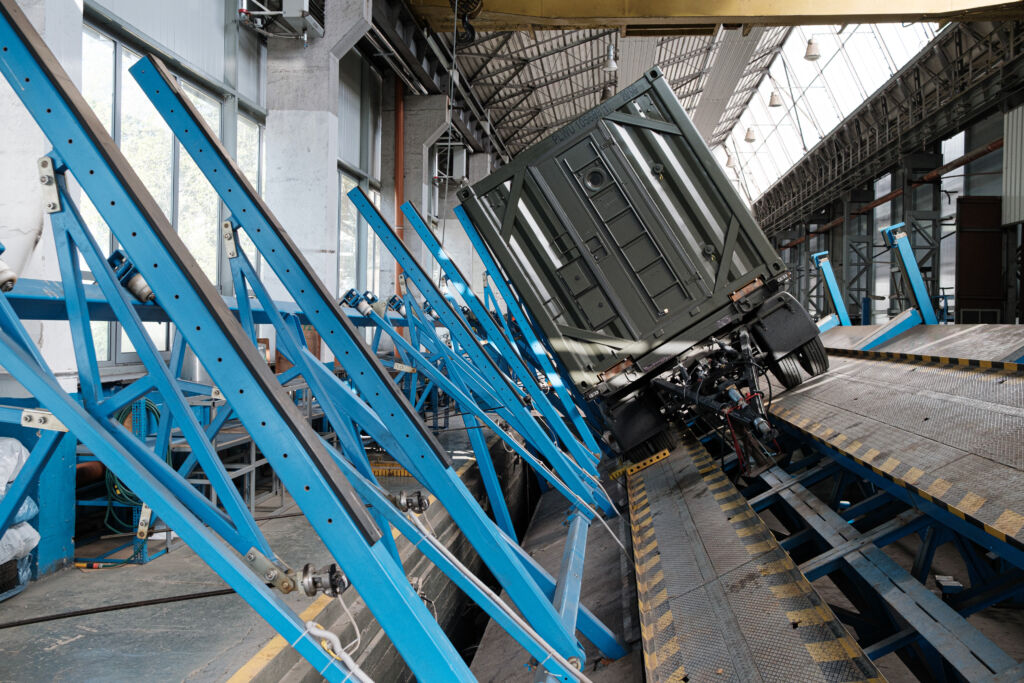
- Static lateral stability,
- Determining the position of the center of mass of vehicles,
- weight measurements, weight distributions to wheels and axles,
- linear and angular dimensions.
The scope of the tests includes, among other things, verification of compliance with current regulations and international standards, evaluation of performance under various operating conditions, including in situations of damage to system components, and verification of the correct selection of components.
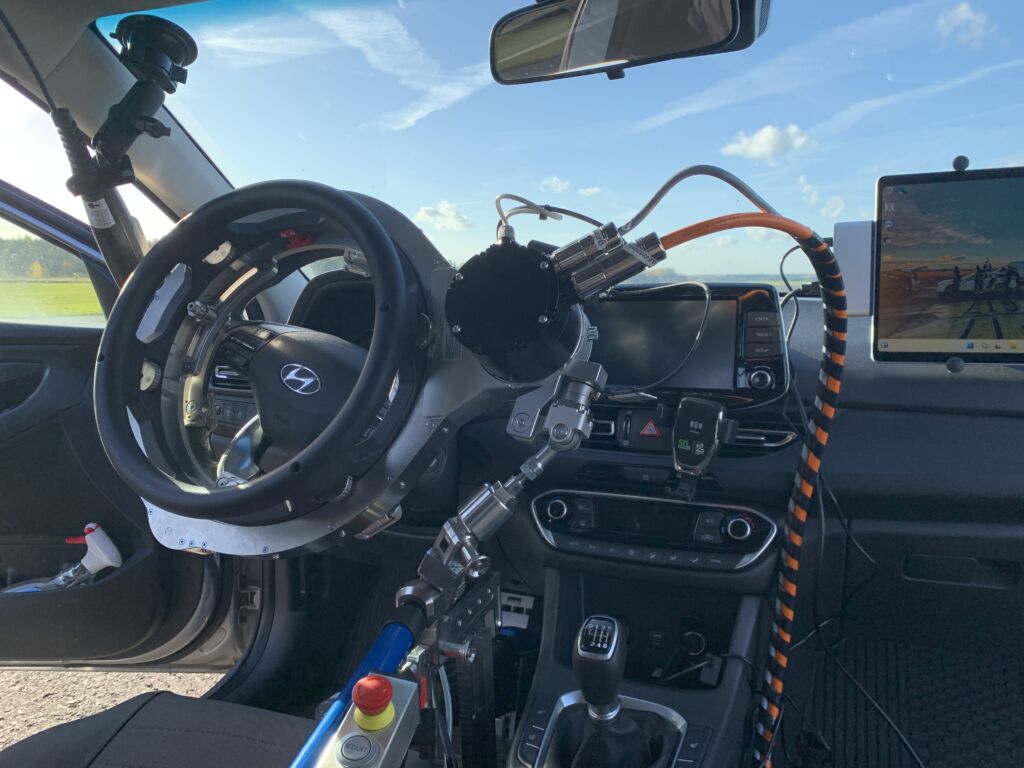
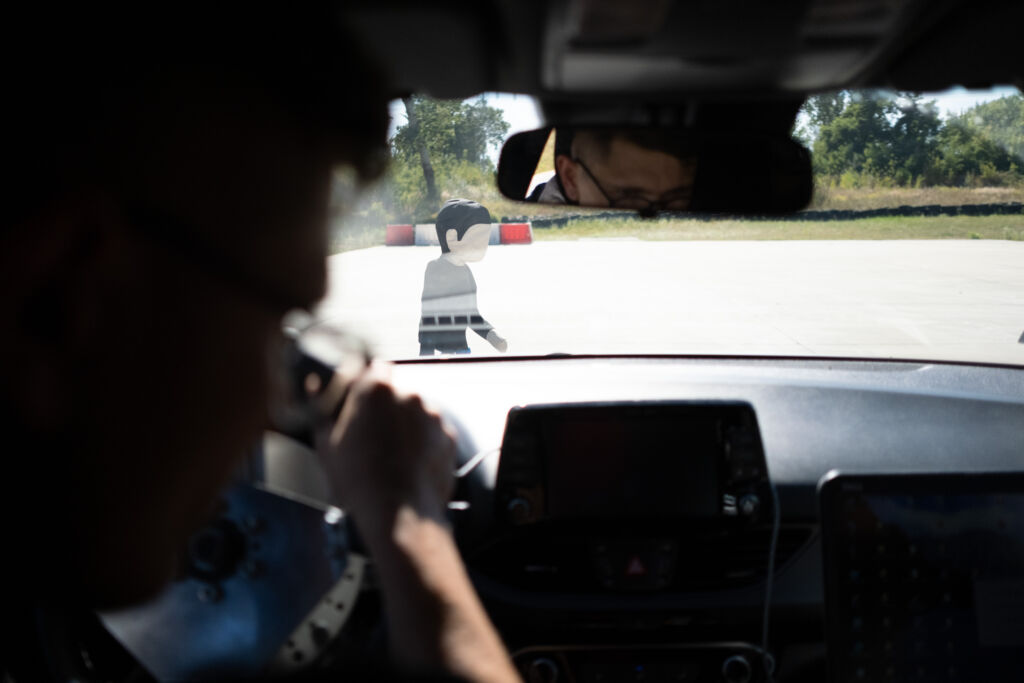
The Laboratory carries out work related to the automation of vehicles and transportation systems, including advanced emergency braking systems, lane departure warning systems, lane keeping assist, emergency steering, adaptive cruise control and speed adaptation assist, among others.
Key research positions:
- Test stand for static lateral stability,
- A set of workstations for measuring mass, its distribution to individual wheels and axles, determining the position of the center of mass, measuring unit pressures of wheels on the ground,
- A set of stations for measuring linear and angular dimensions, including external and internal dimensions, turning diameter, clearance, angle of attack, descent and ramp,
- A stand for determining the elastic-damping characteristics of the suspension,
- A stand for determining the characteristics of the steering system,
- research training grounds in different parts of the country.
Key measurement and testing equipment:
- satellite-inertial systems, to record, among other things, the trajectory of vehicle motion, the linear and angular components of the velocity vector and acceleration in three directions and around three axes,
- Force sensors, including traction and brake pedal pressure,
- Strain gauges with integrated force and rotation angle sensors,
- Pressure sensors in pneumatic systems,
- self-propelled platforms with soft targets (vehicles and pedestrians)
- robots that steer and control the accelerator and brake pedals,
- mobile column lifts,
- Mobile on-board scales for cars and trucks.

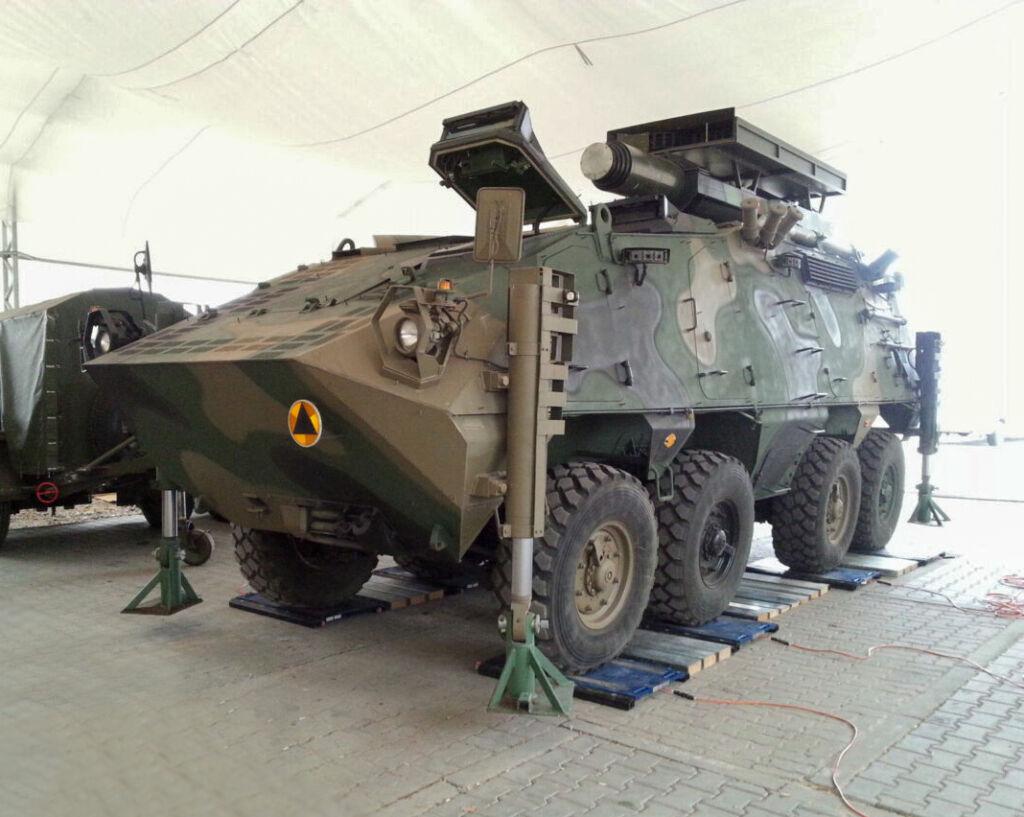
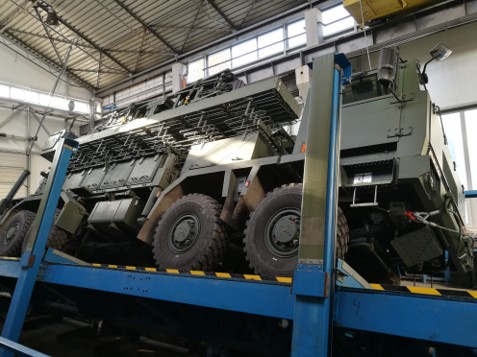
The laboratory provides services for the needs of defense and national security, carrying out tests on military vehicles and other uniformed services, in such areas as:
- Traction capabilities, including overcoming off-road obstacles,
- durability and reliability tests of vehicles and technical equipment,
- environmental resistance,
- transportation vulnerability,
- The pulling force and the valleys for evacuation.
Authorizations and certifications
The laboratory conducts tests in accordance with the documents presented in the scope of accreditation issued by the Polish Accreditation Center and in the scope of OiB accreditation (accreditation by the Minister of National Defense).
In addition, within the framework of the powers granted, the laboratory offers testing services in the field:
- UN Regulation No. 13 – Uniform provisions for the approval of vehicles of categories M, N and O with regard to braking,
- UN Regulation 13-H – Uniform regulations for the approval of passenger cars with regard to braking,
- UN Regulation 78 – Uniform provisions for the approval of vehicles of categories L1, L2, L3, L4 and L5 with regard to the braking system,
- UN Regulation 79 – Uniform provisions concerning the approval of motor vehicles with regard to steering systems,
- UN Regulation 89 – Uniform provisions concerning the approval of vehicles with regard to maximum speed limitation (…),
- UN Regulation No. 90 – Uniform provisions for the approval of replacement brake lining assemblies, replacement drum brake linings, replacement discs and replacement drums intended for vehicles entering an ist trailer,
- UN Regulation 107 – Uniform provisions for the approval of vehicles of category M2 or M3 with regard to their general construction,
- UN Regulation 111 – Uniform provisions for the approval of tank vehicles of categories N1 and O with regard to lateral stability,
- UN Regulation 130 – Uniform provisions concerning the approval of motor vehicles with regard to the lane departure warning system (LDWS),
- UN Regulation 131 – Uniform provisions concerning the approval of motor vehicles with regard to advanced emergency braking systems (AEBS),
- UN Regulation 139 – Uniform Provisions for the Approval of Passenger Cars with regard to Brake Assist Systems in Emergency Situations (BAS),
- UN Regulation 140 – Uniform provisions concerning the approval of vehicles with regard to electronic stability control (ESC) systems,
- UN Regulation 142 – Uniform provisions concerning the approval of motor vehicles with regard to the installation of their tires,
- UN Regulation 141- Uniform provisions concerning the approval of vehicles with regard to their tire pressure monitoring systems (TPMS),
- Commission Regulation (EU) No. 2021/535 regarding the type-approval of vehicles and of systems, components and separate technical units intended for such vehicles (…),
- Commission Regulation (EU) 2015/68 regarding requirements for vehicle braking systems, for the approval of agricultural and forestry vehicles,
- Commission Regulation (EU) 2015/208 with regard to requirements for the functional safety of vehicles for the approval of agricultural and forestry vehicles,
- Commission Regulation (EU) No. 3/2014 with regard to requirements for the functional safety of vehicles for the approval of two- or three-wheel vehicles and four-wheelers,
- EN 1789 standards – Medical vehicles and their equipment. Road ambulances,
- Standards PN-ISO 612 – Road vehicles. Dimensions of motor vehicles and towed vehicles. Terms and definitions,
- Standards EN 1846-2 – Fire fighting vehicles. Part 2: General requirements. Safety and performance,
- Defense Standard NO-06-A107 – Military equipment. General technical requirements, inspection and test methods. Methods of testing total resistance to environmental factors,
- Defense Standard NO-23-A202 – Land combat and support vehicles. Wading and swimming. General requirements,
- Defense Standard NO-25-A200 – Military motor vehicles. Equipment.
The laboratory declares that the services it provides as part of its laboratory activities are carried out in accordance with PN-EN ISO/IEC 17025:2018-02.